
The Role of Logic in Escape Games: Unraveling Mysteries and Challenges
Unlocking the Power of Logic
Escape games have rapidly gained popularity across the United States, captivating players with their intricate puzzles and immersive storylines. These interactive experiences often rely on players’ logical reasoning skills to unravel mysteries and overcome challenges. The magic lies not only in the thrill of escaping but also in the mental agility required to solve puzzles. This surge in popularity has led to a diverse range of themes and difficulty levels, making escape rooms accessible to both novice players and seasoned puzzle enthusiasts alike.
At the heart of every successful escape room is a carefully crafted blend of logic and creativity. The challenges presented to players can include:
- Pattern recognition: Identifying clues hidden within complex designs, such as deciphering symbols or observing subtle differences in artwork.
- Critical thinking: Evaluating information to find the correct path forward, often requiring players to prioritize certain clues over others or to construct hypotheses from limited information.
- Team collaboration: Working together to piece together different components of a puzzle, which fosters communication and trust as players discuss their thoughts and ideas.
Each element of the game demands players to think critically and logically, turning abstract ideas into concrete solutions. For instance, in a typical escape room scenario, a group may come across a locked box that can only be opened with a specific code. Players must first interpret various clues scattered throughout the room, perhaps discovering a sequence of numbers hidden in a book or positioned among artworks. This requires not only observation and attention to detail but also the ability to connect disparate pieces of information into a coherent solution.
As participants delve deeper into these challenges, they often discover the underlying principles of logic at play. Logic puzzles can range from simple riddles to complex mathematical problems, each offering a satisfying sense of achievement when solved. The need for logical deduction enhances the gaming experience; participants are not merely following instructions but engaging in a mental workout. This interactive engagement not only heightens the excitement but also fosters cognitive skills that can be beneficial beyond the game. Research has suggested that regular participation in such mentally engaging activities can improve problem-solving abilities and critical thinking skills in everyday life.
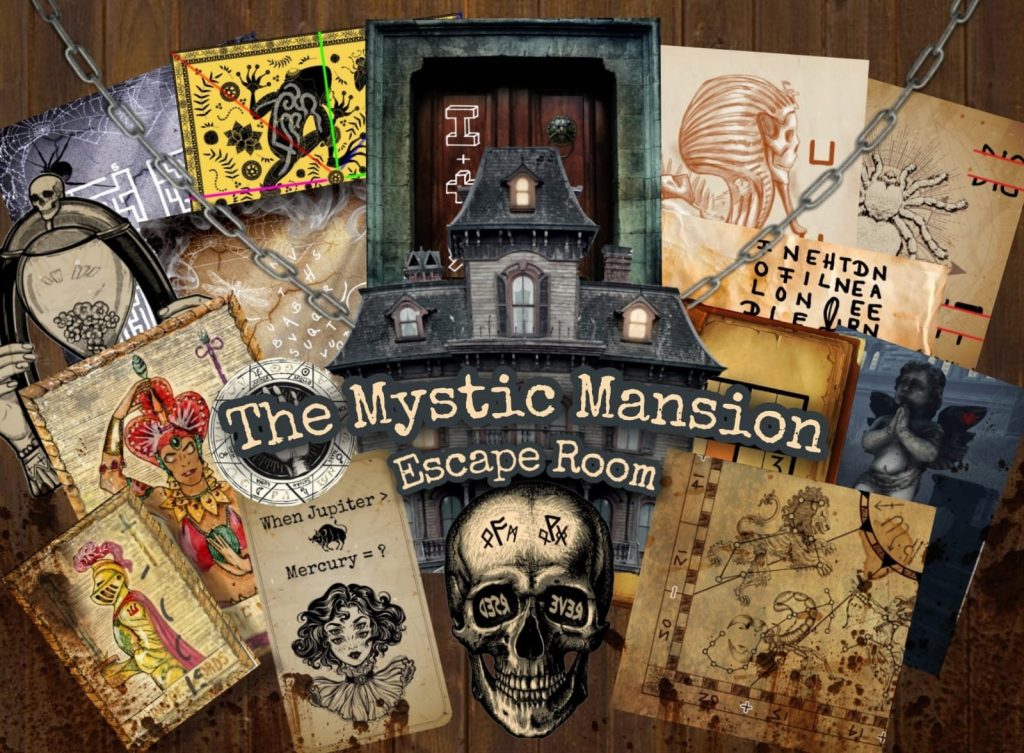
Exploring the role of logic in escape games reveals how these experiences serve as both entertainment and mental training, inviting players to unveil hidden truths while challenging their intellect. With this unique perspective, we can uncover the fascinating dynamics that make escape rooms a beloved pastime for many. Whether it be celebrating a birthday, bonding with colleagues, or enjoying a night out with friends, escape rooms resonate well with a wide audience, further emphasizing the intriguing intersection of logic, teamwork, and fun in these immersive challenges.
DISCOVER MORE: Click here to delve deeper
The Mechanics of Logical Thinking
As players step into the world of escape games, they are often greeted by an array of challenging puzzles designed to test their logical thinking abilities. Each room is a carefully constructed environment where the puzzles not only engage players but also immerse them in a narrative that demands their attention. The underlying logic in these games serves as the backbone of the experience, guiding players as they navigate through layers of complexity. Understanding how these mechanics function allows participants to appreciate the art of puzzle design and the mental gymnastics that come with it.
Several categories of logic-based challenges exist within escape games, each appealing to different aspects of reasoning:
- Deductive reasoning: Players often need to deduce relationships between items and clues. For instance, a clue might indicate that a key is hidden near an object that is ‘neither red nor square,’ requiring players to eliminate possibilities methodically.
- Inductive reasoning: Generalizations are frequently formed based on patterns. A player may notice recurring numbers or colors throughout different puzzles and theorize their significance to unlock the next step.
- Sequential logic: Many escape games involve sequences that must be performed in a particular order. This could mean arranging books on a shelf according to the first letters of their titles to reveal a hidden compartment.
These aspects of logic work together synergistically, forming a web of interconnected challenges that players must solve to progress. For example, players might encounter a puzzle involving a combination lock that demands not just knowledge of numerical patterns but also an understanding of the relationship between various artifacts present in the room. The combination might be derived from a series of riddles, where each solution provides a digit for the lock, thereby emphasizing how critical thinking interplays with logical deductions.
Beyond mere entertainment, the implementation of logical thinking in escape games promotes essential life skills. Engaging in such activities has been linked to improved cognitive functions, as players exercise their brains and develop new problem-solving strategies. An investigation into the psychology of escape games reveals that they provide a platform for individuals to practice resilience and adaptability in the face of challenges. When stressed, players must learn to remain composed, often leading to innovative approaches and collaborative strategies with team members, enhancing their critical thinking and communication.
Furthermore, the social dynamics within escape games cannot be underestimated. Working alongside fellow players to decipher clues fosters a sense of camaraderie. When a team member observes something that others may have overlooked, the collective logic can lead to an “aha” moment that propels the group forward. This interplay of ideas means that an escape room experience can be as much about teamwork and trust as it is about logic. Thus, the role of logic in escape games transcends individual accomplishments, weaving together the cooperative spirit of groups united by a common goal.
The role of logic in escape games is pivotal as it shapes player experiences and outcomes. Logic serves as the backbone of the puzzles and challenges that define these immersive environments. Each game is meticulously designed to challenge participants’ reasoning abilities, leading them through a labyrinth of clues that must be solved collaboratively. As participants engage in these games, they are often faced with intricate scenarios requiring them to draw upon various forms of logic, such as deductive reasoning, spatial awareness, and problem-solving strategies. For example, one might encounter a series of coded messages that can only be deciphered with a keen understanding of patterns and logic flow. This not only enhances cognitive skills but also fosters teamwork as players communicate and brainstorm solutions together.Moreover, the logic used within escape games often mimics real-life situations where critical thinking is essential. Players must analyze information, prioritize tasks, and approach problems systematically, honing their capabilities beyond the gaming setting. This tangible application of logic equips participants with skills that are translatable to everyday decision-making and professional environments.Furthermore, the thrill of unraveling complex mysteries through logical reasoning creates a captivating atmosphere, making escape games both entertaining and intellectually stimulating. Each successful puzzle solution serves to reinforce the importance of logic, transforming a mere game into a profound exercise in reasoning and collaboration that leaves players eager to tackle escape challenges repeatedly. As participants delve deeper into these enigmas, the satisfaction derived from logical triumphs keeps the adrenaline flowing, solidifying the very appeal of escape games. This intricate relationship between logic and gameplay not only captivates the audience but also prompts further exploration into how these skills can be nurtured and developed within these engaging environments. Each victory achieved through logical thinking encourages players to seek out more complex challenges, making the world of escape games an exciting frontier for anyone seeking to enhance their cognitive prowess.
DIVE DEEPER: Click here to unlock the secrets of problem-solving
The Evolution of Puzzle Design and Its Impact
The intricate world of escape games is continuously evolving, with puzzle design now embracing more innovative logic-based challenges that blur the lines between traditional gaming and real-life problem-solving. As technology advances, developers are incorporating interactive elements such as virtual reality (VR) and augmented reality (AR), pushing the boundaries of how logic is applied. This evolution not only enhances the immersive experience but also requires players to engage with logic on deeper levels. For instance, a team participating in an AR escape game might find themselves navigating a digitally enhanced environment where real and virtual clues intertwine, demanding heightened logical reasoning skills.
One significant trend is the incorporation of thematic storytelling within escape games, creating environments where puzzles relate closely to the narrative. Logic is intricately woven into the storyline, helping players connect emotional engagement with intellectual challenges. For example, a mystery involving a kidnapping may require players to piece together timelines based on a series of clues scattered throughout the room. Players must utilize their contextual reasoning skills, making logical connections between characters and events, thereby transforming logic into a compelling narrative tool.
Moreover, the adaptability of logic puzzles to various themes underscores their versatility. A historical escape room may challenge players to decipher ancient scripts or solve mathematical equations relevant to the era, while a sci-fi themed room may twist logic into more abstract concepts like multiverse theories. This thematic fluidity encourages players to approach logic not just as a rigid framework but as a mechanism that can shift depending on context, enhancing their overall gaming experience.
Cognitive research suggests that engaging in such complex logical reasoning not only sharpens problem-solving abilities but also influences emotional intelligence. Players learn to read the room and gauge emotional responses from their teammates, forming a rich tapestry of interpersonal dynamics that are crucial in collaborative settings. A study has shown that 73% of participants in escape rooms reported improved communication skills and teamwork efficiency after one experience, further solidifying the idea that logic extends beyond pure intellectual exercises, influencing how we interact in everyday situations.
The rise of competitive escape games also reflects changing dynamics in how logic is applied. These formats often pit teams against one another, heightening the adrenaline and driving players to refine their logical reasoning under pressure. Players must not only solve puzzles but do so in the most time-efficient manner, leading to more innovative problem-solving strategies. The inclusivity of diverse logical challenges—ranging from visual puzzles to mathematical riddles—ensures that varying types of thinkers can contribute, creating a balanced team dynamic that thrives on diverse logical perspectives.
Furthermore, the trend of hybrid escape games that integrate other genres, such as board games and scavenger hunts, offers players a unique blend of logic-based gameplay. These hybrid experiences often require players to juggle multiple logic concepts simultaneously, further honing their critical thinking skills. Such scenarios teach players to adapt their logical approaches to fit different styles of challenges, showcasing the multifaceted nature of logic itself.
Overall, the role of logic in escape games continues to burgeon as designers innovate and redefine the escape experience. As players become more adept at navigating these challenges, they reinforce not only their logical thinking but also their collaborative spirit, proving that the journey through mystery and challenge is as significant as the ultimate escape.
DISCOVER MORE: Click here to dive deeper
Conclusion: The Dynamic Influence of Logic in Escape Games
In summary, the role of logic in escape games is a pivotal force that shapes not only the gaming experience but also enhances cognitive and social skills among players. As puzzle designs become increasingly sophisticated, the integration of technology like virtual reality (VR) and augmented reality (AR) offers a fresh perspective, inviting players to navigate intertwining clues across varying environments. The emphasis on thematic storytelling ensures that players engage with logic on an emotional level, transforming each challenge into a gripping narrative that demands effective reasoning and critical thinking.
Moreover, the adaptability of logic puzzles showcases their versatility across genres and themes, from historical mysteries to futuristic dilemmas. The cognitive benefits range from sharpened problem-solving skills to enhanced emotional intelligence, as evidenced by studies demonstrating improved communication and teamwork among participants post-experience. As the landscape of escape games continues to evolve, with competitive formats fostering an increased sense of urgency and innovative strategies, players can expect to encounter ever more varied logic puzzles that cater to diverse thinking styles.
Ultimately, the experience within escape rooms transcends mere entertainment; it cultivates a dynamic interplay where logic transforms into an essential life skill. As players embark on these thrilling journeys filled with mysteries and challenges, they not only learn to decode complex puzzles but also build meaningful connections with their teammates. This fusion of logic and collaboration highlights that the real victory lies in the shared journey of unraveling enigmas and confronting challenges together, paving the way for deeper insights into the human capacity for problem-solving and teamwork.
Related posts:
How Logic Games Can Enhance Emotional Intelligence and Resilience
The Role of Logical Reasoning in Mathematical Puzzles and its Practical Application
Developing Logical Reasoning Skills Through Board Games
The Relationship Between Logical Reasoning and Decision Making in Strategy Games
Logical Reasoning and its Influence on Everyday Problem Solving through Puzzles
The Intersection between Logical Reasoning and Strategy in Card Games

Linda Carter is a writer and puzzle expert specializing in mind games, brain teasers, and cognitive challenges. With extensive experience helping individuals enhance their problem-solving skills and think critically, Linda shares her knowledge on our platform. Her goal is to empower readers with practical advice, engaging puzzles, and strategies to sharpen their minds and achieve success in the captivating world of mind games and puzzles.