
The Psychology Behind Mental Games: Why We Love Solving Logical Puzzles

The Allure of Puzzles and Mental Challenges
Mental games and logical puzzles have carved out a unique niche in our lives. From related forms like Sudoku and crosswords to more intricate brain teasers like logic riddles and escape room challenges, these activities offer much more than just entertainment. They tap into deep psychological instincts that keep us coming back for more cerebral stimulation, offering both fun and learning opportunities.
Why do we find such joy in solving these challenges? Let’s explore some intriguing factors that play a critical role in our attraction toward puzzles:
- Problem-Solving Skills: Engaging with puzzles enhances our cognitive abilities. Regularly tackling different types of puzzles can improve our logical thinking, analytical skills, and even our lateral thinking ability. For instance, solving mathematical puzzles sharpens our quantitative reasoning, while crosswords enrich our vocabulary and general knowledge.
- Satisfaction of Achievement: Completing a puzzle provides a profound sense of accomplishment, similar to finishing a marathon or mastering a new skill. The moment of unveiling the last piece of a jigsaw puzzle or solving a challenging clue in a crossword can trigger a release of dopamine in the brain, which is linked to feelings of reward and joy.
- Stress Relief: Focused engagement in a puzzle can serve as a mental escape, allowing individuals to momentarily shift their attention away from daily stresses. This can be particularly beneficial in today’s fast-paced world, where finding a moment of tranquility can seem elusive. For example, a quick session of Sudoku may serve to calm the mind during a hectic workday.
Research supports these observations, noting that logical puzzles activate brain regions associated with reward and motivation. Moreover, they sharpen critical thinking skills and promote a sense of community, as many enjoy sharing solutions with friends or participating in puzzle-solving competitions. This social aspect can transform solitary activities into collaborative ones, thereby enhancing interpersonal relationships.
As we delve deeper into the fascinating world of mental games, it’s essential to recognize the various elements that enhance our experience. Understanding the psychology behind our affinity for these challenges helps us appreciate why they are more than mere distractions. For instance, in the United States, puzzle-solving events such as the American Crossword Puzzle Tournament bring enthusiasts together, showcasing the community aspect while promoting healthy competition.
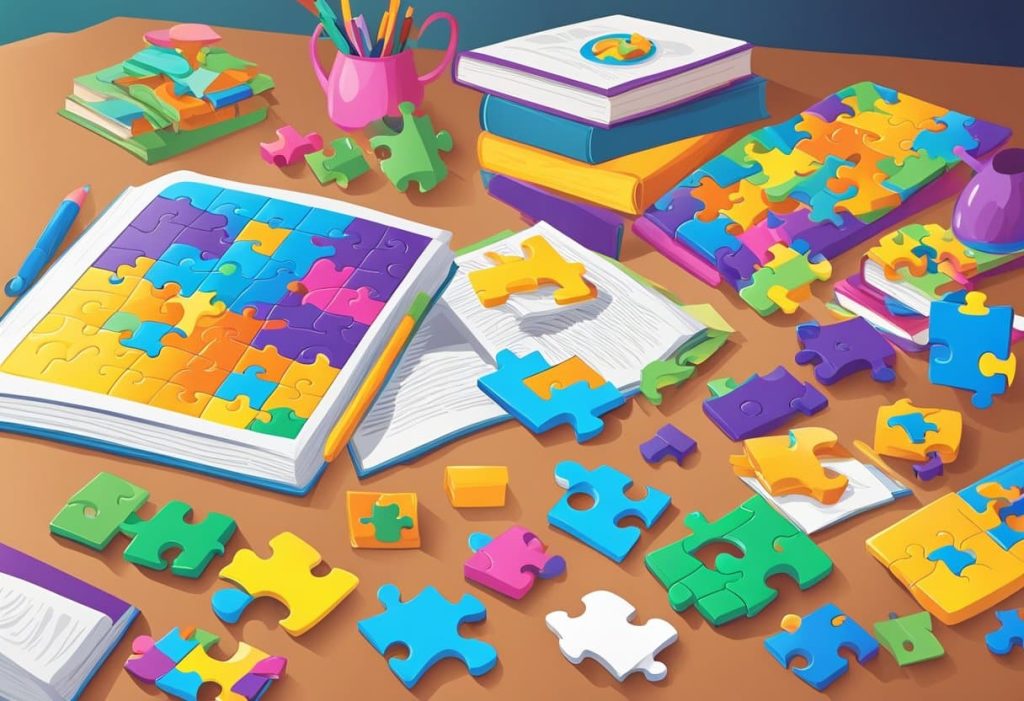
Ultimately, logical puzzles act as tools for cognitive development, personal gratification, and community building. By engaging with these challenges, we not only exercise our minds but also foster a sense of well-being and connection with others who share our passion. As we continue to explore the compelling universe of mental games, it becomes clear that their enduring appeal is deeply rooted in their ability to enrich our lives in multiple dimensions.
DISCOVER MORE: Click here to delve deeper
The Cognitive Benefits of Engaging with Logical Puzzles
As we dive deeper into the world of logical puzzles, it’s vital to recognize the cognitive benefits that these mental games offer. Engaging with puzzles taps into various brain functions, leading to enhanced mental acuity and overall brain health. Research shows that regular exposure to challenging tasks encourages the brain to develop new neural pathways, which is crucial for maintaining cognitive resilience as we age.
One of the most significant advantages of solving logical puzzles is the improvement of critical thinking skills. These skills enable us to analyze problems, evaluate evidence, and make informed decisions. For instance, when working through a complex Sudoku puzzle, we learn to identify patterns and apply logic efficiently. This type of thinking extends beyond puzzles and can be invaluable in real-world situations, such as navigating difficult work scenarios or making personal life choices.
Moreover, puzzles often require creative thinking, which can lead to innovation and unique solutions. Many people think of creativity strictly in artistic terms, but it also plays a vital role in problem-solving. Engaging with puzzles encourages lateral thinking—where individuals look beyond conventional approaches and explore alternative solutions. This creative aspect not only enhances our effectiveness in various tasks but also fosters an adaptive mindset, making us more resilient to life’s challenges.
The Role of Age and Experience
Mental games appeal to people across different age groups, each finding their own value within the activity. While younger individuals might engage with puzzles for educational purposes, older adults may perceive them as a tool for maintaining cognitive function. A study conducted by the University of Cambridge found that older adults who regularly engaged in logical games demonstrated a slower decline in cognitive abilities compared to their peers who did not partake in such activities. Puzzles become more than just a pastime; they serve as key components in preserving mental acuity and staving off cognitive deterioration.
Building Patience and Persistence
Another psychological aspect of solving logical puzzles is the development of patience and persistence. Puzzles often require extended focus and repeated attempts to solve, encouraging individuals to practice grit. The sense of failure that can arise from not solving a puzzle on the first try can, counterintuitively, provide valuable lessons in resilience and determination. This cultivates a growth mindset, whereby individuals learn to embrace challenges rather than shy away from them.
In addition to these cognitive benefits, puzzles also serve as a bridge between generations. Families often bond over solving crossword puzzles or playing chess, creating opportunities for shared experiences and fostering relationships. This interactivity emphasizes the social dimension of puzzles, making them not only a tool for personal development but also a means of strengthening community bonds.
In summary, the cognitive and emotional benefits derived from engaging with logical puzzles underscore their importance in our lives. They not only enhance specific skills, such as critical thinking and creative problem-solving, but also allow individuals to cultivate persistence and enhance social connections. As we continue to explore the myriad ways puzzles enrich our existence, it is evident that their appeal is rooted deeply in our psychological fabric.
| Category | Description |
|---|---|
| Cognitive Challenges | Engaging in logical puzzles stimulates the brain, enhancing problem-solving skills and critical thinking. |
| Emotional Satisfaction | Completing a puzzle releases dopamine, providing a sense of achievement that elevates mood and boosts confidence. |
Exploring the psychology behind why individuals are drawn to logical puzzles reveals fascinating insights into our innate desire for understanding and mastery. Cognitive challenges, such as crosswords and Sudoku, not only entertain but also enhance our mental acuity and problem-solving abilities. This engagement leads to the sharpening of critical thinking skills that are applicable in various facets of life, both personally and professionally.Moreover, the emotional satisfaction derived from successfully solving puzzles creates a rewarding cycle of engagement. When one completes a logic puzzle, the neural pathways activated release dopamine, a neurotransmitter associated with pleasure and reward. This biochemical reaction not only makes us feel good but also reinforces the behavior, prompting individuals to seek out more puzzles in the future. The instant feedback loop of challenge and reward plays a crucial role in our love for these mental games, suggesting a deeper connection between our cognitive processes and emotional responses. Thus, it’s clear that the appeal of logical puzzles extends far beyond mere entertainment; they are integral to our psychological well-being, encouraging continuous growth, learning, and emotional fulfillment.
DIVE DEEPER: Click here to discover more
The Social and Emotional Appeal of Logical Puzzles
Beyond cognitive benefits, the psychology behind mental games involves significant social and emotional dimensions that enhance their appeal. Logical puzzles foster a sense of accomplishment and satisfaction, often providing an intrinsic reward that encourages continued engagement. When individuals successfully solve a challenging puzzle, a release of dopamine occurs in the brain, creating feelings of pleasure and reinforcing the desire to tackle even more complex challenges. This positive feedback loop is a powerful motivator, making puzzles not only entertaining but also a source of emotional fulfillment.
The Competitive Nature of Puzzles
For many, the allure of logical puzzles is amplified by their competitive aspects. Many people find excitement in competing against themselves or others, striving to beat personal bests or race against time. Online platforms and mobile applications have capitalized on this by introducing leaderboards and achievement badges, which not only track progress but also cultivate a sense of community. In this digital age, puzzle enthusiasts can connect with like-minded individuals, share strategies, and even compete in virtual tournaments, enhancing the social experience of solving logical games.
Additionally, puzzles can serve as a common ground for conversation and connection. Families may gather around a jigsaw puzzle, while friends might bond over a challenging crossword. Such activities create opportunities for laughter, teamwork, and shared experiences that transcend age and background. This social engagement enhances emotional well-being and reinforces interpersonal relationships, making puzzles an engaging medium for familial and social connection.
Stress Relief and Mindfulness
Engaging with logical puzzles can serve as an effective form of stress relief, providing a much-needed escape from everyday pressures. The focused nature of solving puzzles allows individuals to immerse themselves fully, which can promote a state of mindfulness. As they concentrate on the task at hand, individuals often experience a reduction in anxiety levels, creating a balance between challenge and relaxation. This form of distraction is particularly valuable in today’s fast-paced society, where individuals are constantly bombarded with information and responsibilities. Research indicates that 61% of adults in the United States turn to puzzles during stressful times, highlighting their role as a therapeutic tool.
Moreover, solving logical puzzles can boost our mental health by providing a sense of purpose. Completing a puzzle can lead to improved self-esteem as individuals recognize their problem-solving capabilities. This boost in confidence can have far-reaching effects on other aspects of life, encouraging people to tackle challenges outside of their puzzle-solving realm.
The Journey of Discovery
The journey involved in solving a puzzle often outweighs the solution itself. Many enthusiasts revel in the process, from brainstorming strategies to experimenting with different approaches. Each puzzle offers a unique opportunity for exploration and discovery, allowing individuals to expand their cognitive horizons. This process of inquiry encourages curiosity and drives the desire to engage with more complex problems, fostering a lifelong love for learning.
In summary, the social, emotional, and psychological components of engaging with logical puzzles enrich our experiences and deepen our understanding of ourselves. By providing a platform for competition, fostering social connections, and offering a pathway for mindfulness and stress relief, these mental games hold a prominent place in the tapestry of human behavior. As we navigate through numerous puzzles and challenges, it becomes clearer that our affinity for these games is rooted not just in a quest for knowledge and skill, but also in a fundamental desire for connection and self-exploration.
DON’T MISS OUT: Click here to discover the significance of logical reasoning in puzzles
Conclusion
In exploring the psychology behind mental games, it becomes evident that our love for logical puzzles stems from a complex interplay of intellectual stimulation, emotional gratification, and social interaction. The joy of solving a puzzle transcends mere entertainment; it taps deeply into our innate drive for accomplishment, competition, and community. As we engage with these challenges, we enhance our cognitive skills while simultaneously reaping significant emotional rewards through the release of dopamine, which fosters a fulfilling cycle of engagement.
The competitive nature of puzzles, especially in today’s digital landscape, not only motivates individuals to strive for personal bests but also cultivates a vibrant community of puzzle enthusiasts. By sharing strategies and celebrating successes together, players forge connections that are profoundly enriching. Additionally, puzzles often serve as delightful conduits for meaningful social interactions, bridging gaps across generations and backgrounds.
Furthermore, the therapeutic benefits of logical puzzles as tools for stress relief and mindfulness cannot be overlooked. As evidenced by the 61% of American adults turning to puzzles during stressful times, these mental games offer a valuable escape, promoting a balance of focus and relaxation amid life’s pressures. The journey of discovery involved in each puzzle fosters curiosity, encouraging a lifelong passion for learning.
Ultimately, our fascination with logical puzzles reveals much about human nature—the desire for challenge, a thirst for knowledge, and an intrinsic need for connection. As we delve deeper into this realm, we uncover not only the layers of our intellectual pursuits but also the emotional and social threads that unite us all. Engaging with puzzles is not just about seeking solutions; it is an exploration of what it means to be human.
Related posts:
How Logical Puzzles Can Enrich Learning in Children
The Role of Logical Reasoning in Mathematical Puzzles and its Practical Application
Developing Logical Reasoning Skills Through Board Games
The Importance of Logical Reasoning in Solving Puzzles
Exploring Logical Reasoning in Digital Games: Challenges and Benefits
How Logic Games Can Enhance Emotional Intelligence and Resilience

Linda Carter is a writer and puzzle expert specializing in mind games, brain teasers, and cognitive challenges. With extensive experience helping individuals enhance their problem-solving skills and think critically, Linda shares her knowledge on our platform. Her goal is to empower readers with practical advice, engaging puzzles, and strategies to sharpen their minds and achieve success in the captivating world of mind games and puzzles.