
The Impact of Sudoku on Problem-Solving Skills
The Allure and Benefits of Sudoku
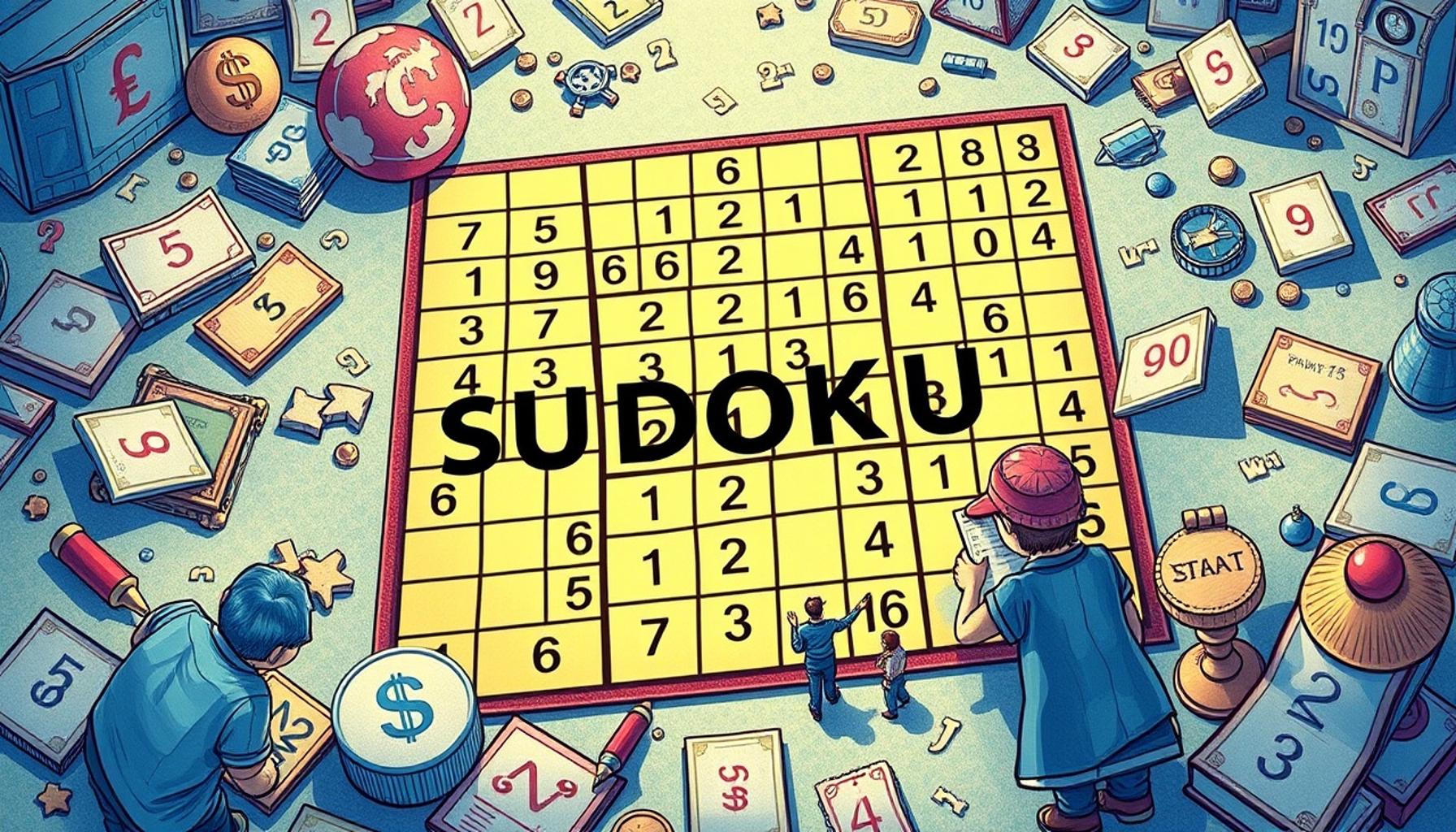
Imagine a grid filled with numbers, where each blank space beckons for the right digits to complete the puzzle. Sudoku, a game that has captivated millions worldwide, is more than just a pastime; it serves as a powerful tool to enhance problem-solving skills and stimulate cognitive functions. Developed in Japan in the late 20th century, this logic-based game has grown into a global phenomenon, with newspapers and apps dedicating entire sections to it. Most people find themselves drawn into the challenge, and as they immerse themselves in the intricate patterns of Sudoku, they engage in a mental exercise that fosters critical thinking and analytical skills.
Sudoku puzzles vary in difficulty, often categorized as easy, medium, hard, or evil. Each level offers a unique challenge that can significantly impact the cognitive development of players. For instance, when facing a challenging extreme puzzle, players must devise a strategy to simplify the problem, breaking it down into manageable parts. This necessity to approach the grid methodically enhances several key cognitive abilities:
- Enhances Analytical Thinking: The game requires players to analyze patterns and make strategic decisions based on limited information. For example, a player must determine where a number fits without disrupting the existing numbers in the row, column, and square, pushing them to think critically.
- Improves Concentration: Focusing on the grid helps develop sustained attention. Research has shown that engaging in activities that require intense concentration, like Sudoku, may lead to improvements in overall attention span and the ability to perform tasks in distracting environments.
- Promotes Logical Reasoning: Each number placement relies on deductive reasoning, allowing players to draw conclusions based on existing clues. This process mirrors problem-solving in everyday life, from making decisions at work to managing personal finances.
Research indicates that regular engagement with Sudoku can stimulate the brain, keeping it sharp and agile. A study from the *Journal of Health Psychology* revealed that older adults who played Sudoku regularly showed slower cognitive decline compared to those who did not engage with puzzles or games. Other studies highlight how puzzles can increase brain connectivity in areas associated with problem-solving and memory.
In a world overflowing with distractions from social media to streaming services, the benefits of immersing oneself in a Sudoku puzzle are profound. Engaging with Sudoku not only promotes better cognitive health but also offers a moment of respite from the chaos of daily life. The simplicity of pencil on paper or tapping on a screen becomes a meditative practice, allowing players to focus entirely on the task at hand.

This article explores the various dimensions of Sudoku, uncovering its impact on our thought processes and everyday decision-making abilities. Whether played in a casual setting or as a competitive pursuit, Sudoku is more than just a game; it is a gateway to enhanced mental acuity and a deeper appreciation for the art of logic in numbers.
DISCOVER MORE: Click here to boost your memory with crossword puzzles
Sudoku as a Catalyst for Cognitive Growth
Sudoku serves as a unique platform for individuals to grow their problem-solving skills through logical reasoning and structured thinking. As players engage with the game, they are not merely filling in numbers; they are developing a framework for approaching complex tasks in both personal and professional settings. Each puzzle demands not only numerical prowess but also the application of problem-solving strategies that can correlate with real-world scenarios.
At the core of Sudoku lies a structure that necessitates systematic thinking. For instance, players must carefully consider each number’s implications on the overall grid, compelling them to foresee the repercussions of their choices. This process reinforces the idea of strategic planning, where considering multiple approaches before selecting a solution can lead to successful outcomes. This aspect particularly resonates with the methodologies employed in various fields such as business, engineering, and software development, where meticulous planning and foresight can make all the difference.
The nature of Sudoku puzzles also necessitates the use of deductive reasoning. Players must deduce where each number belongs based on previously established numbers in the grid. This mirrors the logical steps required in everyday problem-solving situations. Whether one is facing a logistical challenge at work or negotiating a personal issue, the ability to break down the problem into smaller components is invaluable. Several layers of complexity in Sudoku not only challenge a player’s ability to think critically but also hone their capacity to adapt their strategies as they encounter unforeseen obstacles.
- Strengthens Pattern Recognition: A key skill in Sudoku is recognizing numerical patterns, which enhances the player’s ability to identify trends and relationships. This skill is critical in fields such as data analysis and market research, where spotting patterns can lead to insightful conclusions.
- Encourages Persistence: Difficult puzzles often require multiple attempts and revisions of strategy. This fosters a mindset of resilience, teaching players that failure is part of the learning process—a crucial lesson in any problem-solving scenario.
- Boosts Confidence: Successfully solving a challenging Sudoku puzzle provides a sense of achievement. This boost in confidence can translate to other areas of life, encouraging one to tackle complex tasks with a more positive outlook.
When players immerse themselves in Sudoku, they are participating in a comprehensive exercise designed to engage and stimulate multiple cognitive pathways. Research has consistently indicated that engaging in puzzles like Sudoku may result in greater overall mental acuity, with studies revealing that individuals who regularly challenge themselves with such games exhibit enhanced memory and problem-solving capacities compared to those who do not.
In today’s fast-paced society, incorporating activities like Sudoku into daily routines not only sharpens the mind but also provides a mental escape from the digital noise surrounding us. It empowers individuals to cultivate a more profound awareness of their cognitive abilities, ultimately enhancing their problem-solving skills and promoting an enriched quality of life.
The Impact of Sudoku on Problem-Solving Skills
Sudoku is not only a source of entertainment but also serves as an excellent tool for enhancing cognitive abilities. Regularly engaging with Sudoku puzzles can lead to noticeable improvements in various aspects of problem-solving. Below, we explore the advantages of incorporating Sudoku into your daily routine through the following table:
| Cognitive Skills | Enhancement Techniques |
|---|---|
| Logical Reasoning | Improved deduction abilities through systematic analysis of grid placements. |
| Attention to Detail | Sharpened focus gained from identifying patterns and avoiding errors. |
In addition to enhancing logical reasoning and attention to detail, Sudoku also fosters critical thinking skills. When faced with challenging puzzles, players often employ various strategies to arrive at solutions, adapting their approaches as new information is revealed. This adaptability can further influence how individuals tackle real-life problems.Studies have demonstrated that engaging in mentally stimulating activities like Sudoku can reduce the risk of cognitive decline as one ages. Thus, regular practice not only boosts short-term cognitive skills but also contributes to long-term mental acuity. Sudoku, therefore, emerges as a valuable practice for nurturing and enhancing problem-solving skills effectively.
DISCOVER MORE: Click here to uncover the cognitive benefits
Sudoku: A Tool for Enhancing Analytical Abilities
Beyond the immediate game mechanics, Sudoku serves as an intricate training ground for nurturing analytical abilities. As players advance through various levels of difficulty, they come to face an array of logic-driven challenges that require innovative thinking. Each level introduces new obstacles, presenting seasoned players with an opportunity to adapt their previous strategies or develop new ones. This adaptability mirrors the real-world need for flexibility in problem-solving, where circumstances can change rapidly, requiring individuals to reassess their approaches.
Furthermore, engaging with Sudoku provides players with a unique opportunity to develop their time management skills. With each puzzle presenting a constraint—typically, a time limit or the challenge of completing it within a set number of moves—players learn to prioritize their thought processes. They must determine which numbers to place first or which areas of the grid require immediate attention. This simulation of real-life situations, wherein time is often of the essence, builds an acute awareness of how to strategize effectively under pressure. Professionals in fast-paced industries such as healthcare or finance can greatly benefit from honing such skills.
Numerous studies have also correlated Sudoku gameplay with improved numeracy skills. The repetitive nature of the game aids in reinforcing basic mathematical concepts; players increasingly recognize the connections between numbers and patterns, further enhancing both their numerical skills and overall cognitive functionality. A 2021 study published in the journal “Cognitive Processing” found that participants who regularly practiced Sudoku exhibited marked improvements in arithmetic skills, critical thinking, and mathematical reasoning compared to their peers.
- Stimulates Creative Problem-Solving: Sudoku invites players to think outside the box, utilizing creativity to place numbers logically within the constraints of the puzzle. This creative thinking is essential in many fields, allowing professionals to brainstorm innovative solutions to complex problems.
- Facilitates Spatial Awareness: The grid layout of Sudoku requires players to visualize the placement of numbers both within rows and columns. This spatial awareness is vital in disciplines such as architecture, engineering, and urban planning, where a deep understanding of space can lead to more effective designs and solutions.
- Builds Community and Collaboration: Sudoku can also engage groups in collaborative problem-solving environments. Many communities organize competitions or Sudoku clubs, where individuals work together to tackle challenging puzzles. This collective effort fosters communication skills and encourages members to share strategies, creating an invaluable opportunity for learning from one another.
As players immerse themselves in Sudoku, they are not just attempting to solve a puzzle; they are sharpening a variety of skills that will translate seamlessly into their daily lives and work environments. The act of solving Sudoku puzzles promotes critical thinking and deductive reasoning that extend well beyond the game itself. It is this holistic impact on cognitive abilities that emphasizes the broader relevance of Sudoku in enhancing problem-solving skills.
With an increasing interest in cognitive fitness, schools and educational institutions have begun to recognize Sudoku as an effective tool for enhancing learning. By incorporating Sudoku into curricula, educators can provide students with a playful yet rigorous means of developing analytical skills—making the puzzle both a recreational activity and an educational asset. This synergy of fun and learning speaks volumes about the transformative potential of Sudoku in fostering a culture of problem-solving excellence.
DIVE DEEPER: Click here to learn more
Conclusion: Unleashing Cognitive Potential Through Sudoku
In today’s complex world, the ability to solve problems efficiently is more valuable than ever. Sudoku emerges not merely as a popular pastime but as a formidable tool for enhancing problem-solving skills. The game’s intricate challenges compel players to refine their analytical abilities, improve numeracy skills, and cultivate strategic thinking under time constraints. These skills are transferable, making Sudoku a vital practice for professionals across various fields who must navigate fast-paced environments—demonstrating that mental exercises can yield real-world advantages.
Moreover, as players delve into the layers of logic that Sudoku demands, they inadvertently cultivate a mindset tailored for innovation and adaptability. This creative problem-solving facet encourages individuals to embrace flexibility, a crucial trait in a society where change is a constant. Additionally, the collaborative spirit fostered by Sudoku clubs and competitions amplifies social interaction and communication skills, further enhancing the collective problem-solving prowess of communities.
As educational institutions begin incorporating Sudoku into their curricula, the impact of this puzzle extends beyond mere amusement. It serves as an engaging mechanism to bolster learning, inviting students to hone cognitive skills that resonate in real life. By embracing Sudoku, individuals not only challenge themselves but also embark on a journey of mental development, one puzzle at a time. The intersection of enjoyment, education, and skill-building heralds a promising future where Sudoku stands as a cornerstone of problem-solving excellence.
Related posts:
The Connection Between Chess and Cognitive Flexibility
The Benefits of Jigsaw Puzzles for Visual-Spatial Intelligence
How Mind Mapping Games Foster Creative Problem Solving
Enhancing Memory Through Crossword Puzzles
Exploring the Effects of Brain Teasers on Cognitive Agility
How Logic Games Enhance Analytical Thinking

Linda Carter is a writer and puzzle expert specializing in mind games, brain teasers, and cognitive challenges. With extensive experience helping individuals enhance their problem-solving skills and think critically, Linda shares her knowledge on our platform. Her goal is to empower readers with practical advice, engaging puzzles, and strategies to sharpen their minds and achieve success in the captivating world of mind games and puzzles.