Exploring the Relationship Between Jigsaw Puzzles and Spatial Awareness Skills
Understanding the Connection
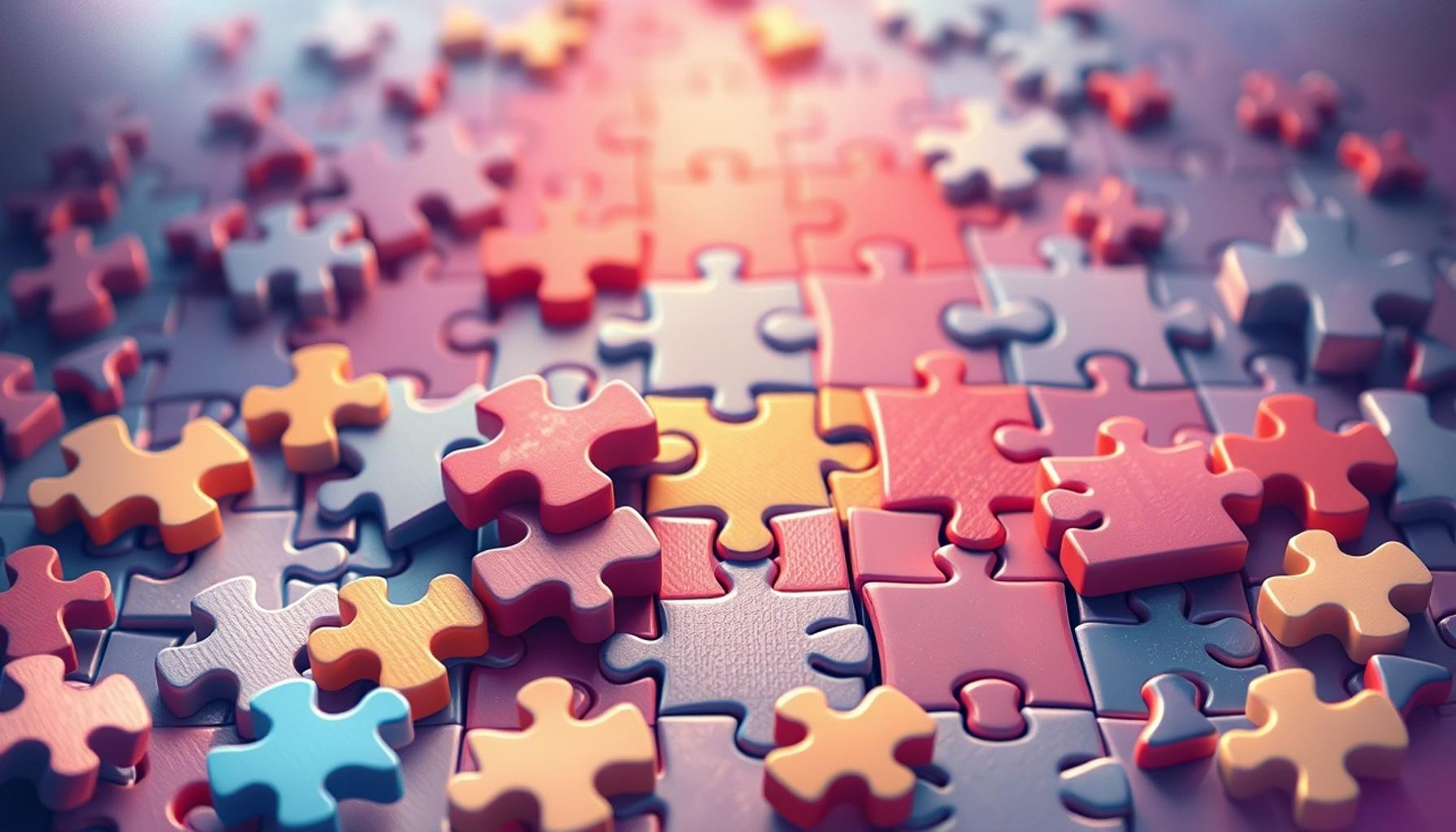
Jigsaw puzzles, often perceived merely as a leisurely activity, wield a much greater influence on the development of critical cognitive skills. One particularly fascinating aspect is their impact on spatial awareness. This essential skill is not only vital for safely navigating our environments—whether it be driving through busy neighborhoods or rearranging furniture—but also plays a pivotal role in diverse fields such as visual arts, architecture, mathematics, and engineering.
Delving into how solving jigsaw puzzles sharpens spatial reasoning abilities reveals several intriguing mechanisms behind their cognitive benefits. These delightful challenges help individuals build essential skills through various engaging processes:
- Visual Discrimination: As an individual pieces together fragmented images, they enhance their ability to distinguish between different shapes, colors, and patterns. This skill is crucial, for instance, in careers such as graphic design or architecture, where a keen eye for detail can make a significant difference in the final product.
- Problem-Solving: Puzzlers often find themselves strategizing the placement of pieces, thereby honing their analytical and critical thinking. This aspect resonates well with mathematical problem-solving, where identifying relationships among numbers requires similar cognitive strategies.
- Memory Retention: The act of remembering where specific pieces fit reinforces cognitive functions and enhances spatial memory. Such memory skills are transferrable to everyday activities, including following maps or remembering locations, which is especially useful in our increasingly digital world.
Additional research indicates that engaging in jigsaw puzzles can yield remarkable benefits for both children and older adults. For children, early exposure to these puzzles may lay a strong foundation for future skills in mathematics, science, and even reading, as they develop their recognition of patterns and sequences. For older adults, regularly tackling puzzles offers a fun and stimulating way to help stave off cognitive decline, maintaining mental acuity and enhancing overall quality of life.
The implications of jigsaw puzzles extend far beyond simple entertainment, proving that they are not just about fitting pieces together. This exploration into their cognitive benefits provides profound insights into human development and everyday functioning. Whether you are a seasoned puzzler or just beginning to discover this pastime, understanding its ties to cognitive skills invites one to consider how such an enjoyable activity can enrich life in unexpected ways.
DIVE DEEPER: Click here to unlock the secrets of Sudoku
The Multifaceted Benefits of Jigsaw Puzzles
When individuals engage with jigsaw puzzles, they unwittingly participate in a myriad of cognitive exercises that contribute to enhancing their spatial awareness skills. This intricate dance of manipulating shapes and colors does far more than entertain; it operates as a training ground for the brain. Understanding the nuances of these benefits can shed light on why puzzles have remained a popular pastime across generations.
One primary element that comes into play when solving jigsaw puzzles is shape recognition. As puzzlers sift through pieces, they naturally develop the ability to identify various shapes and their corresponding characteristics. This skill goes beyond the puzzle table and resonates in everyday life—think about the liminality of recognizing road signs while driving or identifying the best dimensions for a home improvement project. Shape recognition enriches one’s ability to navigate spaces both mentally and physically, emphasizing its relevance in real-world applications.
Moreover, the concept of spatial orientation becomes significantly sharper through puzzle-solving. As individuals rotate pieces and visualize how they interlock, they practice critical spatial strategies. This aspect of spatial awareness is especially vital in fields like architecture and engineering, where understanding the relationship between physical structures is crucial. Research shows that people who regularly engage in spatial tasks, such as jigsaw puzzles, often experience enhancements in their ability to visualize three-dimensional objects from different angles.
Engagement with jigsaw puzzles also fosters cognitive flexibility, a skill that allows individuals to switch between different tasks or strategies. This skill is essential not just for successfully completing a puzzle but also for adapting to new situations in daily life. For example, when confronted with a difficult puzzle piece that doesn’t quite fit where anticipated, a puzzler must reconsider and evaluate new hypotheses—an exercise that mirrors adaptive problem-solving in various contexts, from academic settings to professional environments.
In addition to these cognitive advantages, jigsaw puzzles serve as an enjoyable method for fostering teamwork and social interaction. While often enjoyed solo, solving puzzles can also be a collaborative endeavor. Groups of friends or family members working together can discuss strategies and share insights, thereby enriching their spatial skills while bonding over a shared challenge. This collaborative aspect emphasizes the notion that skills developed through jigsaw puzzles are not only personal but can also transform social dynamics.
The benefits of jigsaw puzzles are indeed extensive, ranging from enhanced spatial skills to fostering cognitive flexibility and teamwork. As research continues to match the findings with practical applications, the realization becomes clear: jigsaw puzzles are not merely a leisure activity; they are a powerful tool for unlocking potential across diverse spheres of life. Engaging with puzzles is a compelling way to elevate one’s mental agility and adaptability, showcasing how a simple challenge can enrich cognitive development significantly.
| Advantages of Jigsaw Puzzles | Impact on Spatial Awareness Skills |
|---|---|
| Enhanced Problem-Solving Skills | As individuals tackle jigsaw puzzles, they develop critical problem-solving abilities that are essential for spatial reasoning. |
| Improved Visual-Spatial Skills | Regular engagement with jigsaw puzzles increases the capacity to visualize and manipulate objects in space, boosting overall spatial awareness. |
| Cognitive Flexibility | Jigsaw puzzles require individuals to adapt their strategies, enhancing cognitive flexibility and aiding in multifaceted spatial tasks. |
| Greater Attention to Detail | Participants sharpen their attention to detail, a key component for accurate spatial perception and navigation. |
Continuing our exploration of the relationship between jigsaw puzzles and spatial awareness skills, it becomes evident that these simple yet engaging activities provide profound benefits beyond mere enjoyment. Engaging with jigsaw puzzles allows individuals of all ages to develop a range of cognitive skills crucial for daily life. This engaging pastime not only heightens one’s ability to observe details but also fortifies problem-solving capabilities. Research indicates that the practice of assembling puzzles aligns strongly with enhancing spatial perception, making it a compelling subject for educators and psychologists alike. By investing time in puzzles, individuals cultivate the foundational skills that contribute to better spatial navigation, essential in environments ranging from classrooms to urban settings. The positive impact on cognitive flexibility allows players to switch between different perspectives, reinforcing their ability to tackle varied challenges. These advantages lead us to question further how individual differences, such as age and experience, influence the extent of these cognitive benefits when engaging with jigsaw puzzles. Therefore, a deeper investigation into these factors may provide additional insights into harnessing the full potential of jigsaw puzzles as a tool for cognitive development.
DIVE DEEPER: Click here to learn more
Unlocking Hidden Potential through Jigsaw Puzzles
The cognitive journey initiated by engaging with jigsaw puzzles extends even further when considering the aspect of problem-solving abilities. As individuals tackle these intricate challenges, they learn to devise strategies to systematically eliminate incorrect placements. This iterative process not only sharpens their focus but also enhances their ability to break down larger problems into manageable parts—a skill that transcends the boundaries of mere recreational activity and extends into academic and professional domains. In fact, many educational programs now integrate visual puzzles into their curriculum to stimulate critical thinking and reinforce mathematical concepts.
Another noteworthy dimension of jigsaw puzzles is their connection with memory development. When puzzlers strive to identify which pieces fit together, they tap into their short-term memory. By recalling the locations of particular frame segments or unique colors, they actively strengthen neural pathways, thus improving their overall memory capacity. Scientific studies indicate that memory exercises such as puzzle-solving can significantly combat cognitive decline in older adults. This aspect unearths the profound impact of jigsaw puzzles in maintaining mental acuity, especially within aging populations, making them not just a leisure activity but a vital component of cognitive health.
Furthermore, the interplay of visual perception and spatial reasoning found in jigsaw puzzles plays a crucial role in various professional fields. For instance, surgeons often require exceptional spatial awareness to visualize internal anatomy accurately during procedures. Engaging in activities like jigsaw puzzles can hone these vital skills, thus potentially enhancing surgical performance. A study published in the Journal of Pediatric Surgery found that trainees who routinely participated in spatial visualization activities—like completing jigsaw puzzles—demonstrated improved dexterity and precision during surgical tasks. This highlights the broader implications of jigsaw puzzles beyond mere pastime and into crucial professional development.
In addition to fostering specific skill sets, puzzles present a unique pathway for enhancing patience and perseverance. The challenges posed by intricate puzzles can be discouraging, yet the act of continuing to work through difficulties cultivates resilience. In today’s fast-paced world, these attributes become imperative not just for personal growth but also for workforce effectiveness. Companies are increasingly recognizing the value of resilience and adaptability in employee training protocols, often incorporating team-building exercises like jigsaw puzzles to develop these essential traits.
Jigsaw Puzzles as Tools for Educational Institutions
As educators continue to seek innovative methods to enhance learning experiences, jigsaw puzzles have emerged as viable tools within classrooms across the United States. Many educators utilize these puzzles to teach geometry, spatial reasoning, and problem-solving in engaging and interactive ways. The tactile nature of puzzles allows students to visualize complex concepts, making learning both impactful and enjoyable. Moreover, puzzles can cater to various learning styles, ensuring inclusivity within diverse classrooms. They not only facilitate better comprehension of spatial relationships but also promote teamwork and peer-to-peer learning, ultimately enriching the educational environment.
The intricate relationships between jigsaw puzzles and enhanced spatial awareness skills are vast and multifaceted, extending their influence from recreational enjoyment to notable advancements in cognitive training and educational applications. As the appeal of jigsaw puzzles continues to resonate across generations, it becomes increasingly evident that they are not just a source of amusement but are, in fact, powerful tools designed to unlock hidden potential in both children and adults alike.
DIVE DEEPER: Click here to discover the benefits
Conclusion: The Multifaceted Benefits of Jigsaw Puzzles
The exploration of the relationship between jigsaw puzzles and spatial awareness skills reveals a wealth of cognitive, educational, and personal development advantages. Engaging in puzzle-solving not only challenges individuals to utilize their problem-solving abilities, but it also encourages critical skills such as memory enhancement, visual perception, and even the cultivation of patience and perseverance. These attributes are increasingly recognized as vital not only in traditional academic settings but also in various professional fields, including medicine and engineering, where spatial reasoning is crucial.
Furthermore, the strategic integration of jigsaw puzzles in classrooms underscores their value as an interactive learning tool. The tactile and visual elements they offer can promote collaboration, foster critical thinking, and cater to diverse learning styles, thereby enriching the educational experience for both teachers and students. Such initiatives empower learners to grasp complex concepts while developing essential soft skills that extend beyond the classroom.
As this enduring pastime continues to gain popularity across generations, it stands as a testament to the profound impact that jigsaw puzzles can have on our cognitive health and skill development. With the backing of scientific research and anecdotal evidence, it is clear that puzzles are far more than mere leisure activities; they represent a gateway to unlocking hidden potential and fostering lifelong learning. By embracing the multifaceted benefits of jigsaw puzzles, individuals can engage in an enjoyable yet substantial endeavor that contributes to personal and professional growth.
Related posts:
The Role of Strategy Games in Developing Critical Thinking
How Mind Mapping Games Foster Creative Problem Solving
The Impact of Sudoku on Logical Reasoning Skills
The Impact of Sudoku on Problem-Solving Skills
How Memory Games Enhance Recall and Retention Abilities
The Influence of Escape Room Challenges on Teamwork and Communication Skills

Linda Carter is a writer and puzzle expert specializing in mind games, brain teasers, and cognitive challenges. With extensive experience helping individuals enhance their problem-solving skills and think critically, Linda shares her knowledge on our platform. Her goal is to empower readers with practical advice, engaging puzzles, and strategies to sharpen their minds and achieve success in the captivating world of mind games and puzzles.