
The Role of Logical Reasoning in Mathematical Puzzles and its Practical Application

Unlocking the Power of Logic in Puzzles
Mathematical puzzles have a unique charm, captivating enthusiasts worldwide. The underlying force that drives these intriguing challenges is logical reasoning, a skill that not only fosters creativity but also enhances critical thinking. Understanding this relationship is essential for anyone eager to master mathematical problem-solving.
The Importance of Logical Reasoning
At its core, logical reasoning enables individuals to:
- Analyze problems step-by-step.
- Identify patterns and relationships.
- Develop structured solutions efficiently.
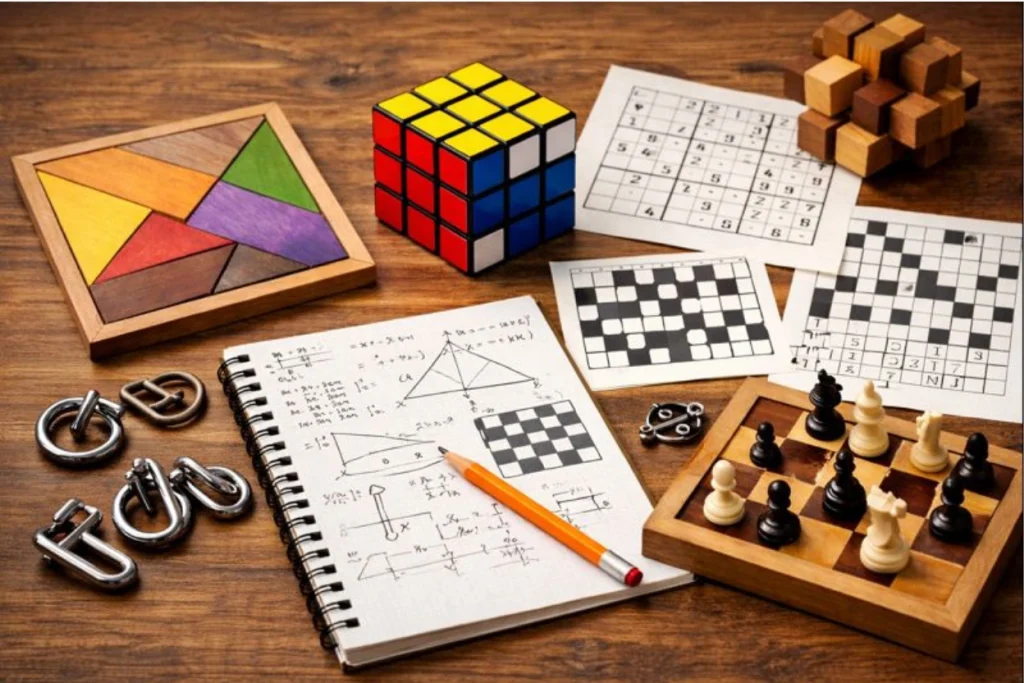
Engaging with mathematical puzzles sharpens these skills, pushing the boundaries of analytical thinking. For instance, when solving a Sudoku puzzle, a player must evaluate numbers’ placement methodically while considering constraints and possibilities connecting rows, columns, and boxes. This exercise trains the mind to assess information critically and make informed decisions, which is central to logical reasoning.
As such, these puzzles can translate into significant benefits in real-world scenarios. Logical reasoning serves as the backbone not just for academic pursuits but also for everyday decision-making. Consider a scenario where an individual is trying to figure out the most efficient route to avoid traffic while commuting. By analyzing alternative routes and assessing historical traffic data, one can make better choices informed by logic. This practice extends beyond transportation, influencing how we solve problems across various domains.
Practical Applications in Everyday Life
Logical reasoning honed through puzzles is applicable in various fields:
- Engineering: Designing structures that require precise calculations often demands a structured approach to problem-solving. For example, civil engineers rely on logical reasoning to ensure that bridges and buildings are safe, using mathematical models to evaluate load-bearing capabilities.
- Finance: Analyzing data trends for better investment decisions relies heavily on logical reasoning. Financial analysts use historical data sets to identify patterns, helping investors make choices that are not only data-driven but also strategically sound.
- Education: Teaching problem-solving strategies to students is a crucial aspect of modern education. Educators can utilize puzzles as a fun and engaging way to develop students’ analytical skills, creating a foundation for future academic success.
Through these examples, it’s clear that the skills developed from engaging with mathematical puzzles extend far beyond mere entertainment. The fusion of logic and creativity found in puzzle-solving not only inspires innovative thinking but also enhances our problem-solving capabilities in daily life. By embracing this intellectual challenge, individuals can foster a deeper understanding of the world around them, enriching both their professional and personal experiences.
DIVE DEEPER: Click here to learn more
Unveiling the Mechanics of Logical Reasoning
The interplay between logical reasoning and mathematical puzzles goes far beyond mere enjoyment. It serves as a systematic framework that helps individuals decipher complex challenges. Whether it is determining the solution to a mathematical riddle or cracking a code, the core of each puzzle relies on a structured approach that logical reasoning provides.
When encountering a mathematical problem, a solver initiates a unique mental process. This involves:
- Defining the Problem: Understanding what is being asked is crucial. This first step typically involves breaking down the puzzle into smaller, manageable parts.
- Establishing Relationships: Solving a math puzzle often requires recognizing relationships between different elements. For example, in a logic grid puzzle, one must connect various pieces of information to draw conclusions and eliminate impossibilities.
- Formulating Hypotheses: Based on the defined parameters, the solver creates potential solutions. This involves a degree of creativity while remaining grounded in logical parameters.
- Testing Solutions: Once a solution is posited, it must be verified to ensure it fits all conditions set by the puzzle. This trial-and-error approach exemplifies the practical application of logical reasoning.
Through this structured process, individuals can enhance their cognitive abilities, leading to improved reasoning skills. Engaging in puzzles like logic puzzles or math riddles can also sharpen brain function and promote mental agility, appealing to all age groups. Research indicates that regular puzzle-solving can contribute positively to brain health, effectively delaying cognitive decline and enhancing problem-solving capabilities.
The implications of honing logical reasoning skills through mathematical puzzles extend well into the professional realm. In high-stakes environments such as healthcare and technology, logical reasoning becomes indispensable. For instance, healthcare professionals often utilize logical frameworks to diagnose ailments based on presenting symptoms, medical history, and test results. Similarly, software developers rely on logical reasoning to troubleshoot complex coding issues and develop efficient algorithms.
Furthermore, understanding logical reasoning’s role in puzzle-solving can empower individuals in fields like business management. Managers frequently face challenges that require clear analysis and strategic planning. By applying logical reasoning techniques learned from puzzle engagement, they can assess scenarios efficiently, make sound decisions, and forecast outcomes more accurately.
The fascinating potential of logical reasoning does not stop at professional applications; it also enriches personal lives. Decision-making situations—including financial investments, relationship choices, or parenting strategies—benefit immensely from the logical frameworks developed through puzzle-solving. When individuals apply structured reasoning in diverse aspects of life, they pave the way for greater outcomes and enhanced satisfaction.
The Role of Logical Reasoning in Mathematical Puzzles and its Practical Application
Mathematical puzzles are not just an exercise in numbers; they are a playground for the mind, fostering crucial skills that extend beyond mere calculations. Logical reasoning steps into the spotlight here, acting as the bedrock upon which these puzzles are built. It encourages systematic thinking, enabling individuals to dissect complex problems into manageable parts. This approach enhances not only mathematical skill but also cognitive flexibility, allowing for a diverse range of strategies—critical in today’s problem-solving environment.Furthermore, the practical applications of logical reasoning gleaned from solving mathematical puzzles are expansive. One significant domain is in education, where engaging students with mathematical puzzles cultivates an intrinsic appreciation for mathematics. Teachers can leverage these challenges to develop students’ problem-solving techniques while igniting passion for the subject. Likewise, professionals in scientific fields often employ logical reasoning to interpret data, formulate hypotheses, and achieve innovative solutions.The synthesis of logical reasoning and mathematical puzzles serves to refine analytical thinking, providing a robust framework for decision-making in both everyday scenarios and professional endeavors. As practitioners of various fields recognize these benefits, the demand for logical reasoning skills rooted in mathematical puzzle-solving is increasingly salient.
| Key Benefit | Description |
|---|---|
| Enhanced Problem-Solving Skills | Logical reasoning enables individuals to identify patterns and devise effective solutions in mathematical puzzles. |
| Practical Applications | Skills learned from solving puzzles can be applied in fields like engineering, finance, and science, where logical reasoning is crucial. |
Incorporating logical reasoning into everyday practices through puzzles refines mental agility and the ability to make informed decisions, impacting both personal growth and professional success. Embracing these challenges can be transformative, leading to heightened analytical capabilities and improved performance across various disciplines.
DISCOVER MORE: Click here to uncover the benefits
The Broader Impact of Logical Reasoning on Society
As the significance of logical reasoning in mathematical puzzles unfolds, its impact transcends individual development, revealing its importance in community and societal contexts. From education systems to cultural perspectives, logical reasoning nurtured through puzzle-solving can bolster innovation, problem-solving, and even collaboration in group settings.
In the realm of education, the application of logical reasoning in mathematical puzzles helps cultivate critical thinking skills among students. Educators are increasingly incorporating logic-based games and puzzles in their curriculum to foster not just mathematical proficiency but also creativity and critical analysis. Studies suggest that students exposed to these activities exhibit improved performance in mathematics and related disciplines, as the challenges push them to apply theoretical concepts in practical scenarios. For instance, problem-based learning environments encourage students to solve real-life issues through logical reasoning, encouraging not only engagement but also deeper comprehension.
Furthermore, engaging in mathematical puzzles can ignite a passion for learning among students. The satisfaction derived from solving a challenging riddle or completing a rich math puzzle can motivate a lifelong pursuit of knowledge and inquiry. This pursuit is crucial in developing a generation that values reasoning, analysis, and evidence-based conclusions over misinformation and uninformed opinions. A recent report from the National Math and Science Initiative revealed that 70% of students who regularly engage with logic puzzles are more likely to pursue STEM-related fields in their future careers, underscoring the long-term societal benefits of nurturing logical reasoning from an early age.
Moreover, logic-driven methodologies have also penetrated the workforce through the rise of data-driven decision-making. Organizations increasingly rely on logical frameworks derived from mathematical puzzles to analyze market trends, optimize processes, and evaluate performance metrics. For example, businesses utilize logical models to develop predictive analytics, enabling data scientists to provide insight that shapes company strategy and product development. The skills honed through solving mathematical puzzles can enhance a team’s ability to think critically about data interpretation and application, thus fostering a culture of informed decision-making.
In practical applications, the entertainment industry has also recognized the value of logical reasoning. Games that emphasize problem-solving, like escape rooms or strategy-based video games, invite participants to engage their logical faculties in a social and collaborative manner. This not only enhances individual cognitive skills but also promotes teamwork, as groups must communicate and combine reasoning strategies to succeed. Events that center around puzzle-solving, such as competitions or conventions, have gained popularity, drawing people with diverse backgrounds together to share and apply their logical reasoning skills in fun and inventive ways.
Looking beyond individual or organizational benefits, the cultivation of logical reasoning through mathematical puzzles can serve as a powerful tool for societal advancement. By equipping individuals with sharp reasoning abilities, communities can tackle complex issues—ranging from public policy challenges to technological innovation—with a measured and analytical approach. The potential for collaborative, logic-focused problem-solving extends the reach of mathematical puzzles far beyond the recreational realm, establishing a solid foundation for future generations.
DISCOVER MORE: Click here to enhance your skills
Conclusion: Embracing Logical Reasoning for a Brighter Future
In summarizing the pivotal role of logical reasoning in mathematical puzzles, it becomes evident that these cognitive challenges extend far beyond mere entertainment. They form a crucial backbone for critical thinking skills, innovation, and practical problem-solving—not only in education but also across various sectors, including business and community engagement. By integrating logical reasoning into the learning process, educators are preparing students not just to excel academically, but to approach complex real-world issues with analytical finesse.
The data supporting the long-term benefits of these skills is compelling. As illustrated by findings from the National Math and Science Initiative, a significant majority of students engaging in logical puzzles gravitate towards STEM fields, ultimately shaping the future workforce. Furthermore, businesses that leverage logical reasoning frameworks drive their strategies with data-centric insights, positioning themselves favorably in competitive markets. This highlights how crucial logical thinking has become in navigating today’s data-driven economy.
Moreover, the cultural impact of logical reasoning in recreational formats, such as puzzles and games, strengthens community bonds and fosters cooperative skills. It encourages diverse groups to unite in challenges that demand collective reasoning, proving that logic can indeed serve a unifying purpose. Overall, the essential takeaway is that fostering logical reasoning through mathematical puzzles is not just about enhancing individual intellect; it is about cultivating a society that prioritizes analysis, creativity, and collaboration. By embracing this ethos, we pave the way for future generations to confront dilemmas with clarity and confidence, transforming the very structure of our communities for the better.
Related posts:
How Logic Puzzles Can Improve Memory and Concentration
The Intersection between Logical Reasoning and Strategy in Card Games
How Logical Puzzles Can Enrich Learning in Children
How Logic Games Can Enhance Emotional Intelligence and Resilience
The Importance of Logical Reasoning in Solving Puzzles
Challenges of Logical Reasoning: How Puzzles Stimulate Creativity and Logic

Linda Carter is a writer and puzzle expert specializing in mind games, brain teasers, and cognitive challenges. With extensive experience helping individuals enhance their problem-solving skills and think critically, Linda shares her knowledge on our platform. Her goal is to empower readers with practical advice, engaging puzzles, and strategies to sharpen their minds and achieve success in the captivating world of mind games and puzzles.