
How Logical Puzzles Can Enrich Learning in Children

Unlocking Potential Through Logic
In today’s fast-paced learning environment, engaging children in unique ways is more crucial than ever. Logical puzzles serve as an effective avenue for enhancing cognitive skills and critical thinking. These captivating challenges not only entertain but also stimulate intellectual growth in a myriad of ways for young learners.
The Multidimensional Benefits
- Boost Problem-Solving Skills: Logical puzzles encourage children to break down complex problems into manageable components. For instance, Sudoku requires players to systematically approach the placement of numbers based on existing patterns, teaching young minds to think critically and analytically.
- Enhance Memory: Engaging with puzzles helps children improve their memory as they must recall information and strategies applicable to puzzle-solving. Memory games, like matching pairs, develop both short and long-term memory, making them fun yet educational activities.
- Foster Creativity: In an age where creativity is vital, puzzles that require thinking outside the box make being imaginative a necessity. For example, escape room puzzles demand innovative thinking where participants must explore unconventional methods to “escape,” stimulating creative problem solving.
By engaging with logical puzzles, children also develop important life skills, such as improved focus, the ability to work in teams during collaborative activities, and a greater sense of accomplishment upon overcoming challenges. These skills are not only essential in academic settings but also beneficial in various everyday situations—from tackling daily tasks to engaging in cooperative sports.
Incorporating Puzzles in Learning Environments
Educators and parents can incorporate logical puzzles into both classroom and home activities, unlocking an entertaining yet educational world. Some effective methods include:
- Utilizing interactive apps and online platforms that offer a wide range of logical puzzles tailored to different age groups, such as logic grid puzzles or riddles, making learning accessible and fun.
- Organizing puzzle-solving competitions in classrooms or community centers, where participants can showcase their skills, bond with peers, and receive recognition for their achievements.
- Integrating puzzles into subject matter discussions to illustrate concepts in math or science through engaging challenges, thereby reinforcing learning through enjoyable activities.
By harnessing the power of logical puzzles, both children and educators can pave the way for enriched learning experiences that extend beyond traditional education. The integration of these simple yet effective tools can reshape a child’s learning journey, laying a solid foundation for their future. Explore the world of logical puzzles further and discover how they can profoundly impact cognitive development and foster lifelong skills in young minds.
DISCOVER MORE: Click here to delve into the impact of escape room challenges
Cognitive Growth Through Engaging Challenges
Logical puzzles are not just a source of entertainment; they act as key instruments for enhancing children’s cognitive development. By introducing children to a range of puzzle types, parents and educators can cultivate important skills essential for both academic and life success. From enhancing focus to encouraging perseverance, the benefits of logical puzzles permeate every aspect of a child’s growth.
Building Analytical Thinking
One of the most significant advantages of engaging with logical puzzles is the way they build analytical thinking skills. Problems that require logical reasoning, such as riddles or pattern recognition tasks, compel children to assess and evaluate multiple solutions. For instance, a classic problem like the Tower of Hanoi requires players to strategically move disks between pegs without breaking the rules. This type of puzzle stimulates children to think through their decisions methodically, often enhancing their ability to approach academic subjects like mathematics with a similar mindset.
Encouraging Mathematical Proficiency
Logical puzzles also play a remarkable role in developing mathematical proficiency. Puzzles like logic grid puzzles or mathematical crosswords present children with an engaging way to apply mathematical concepts and relationships in a playful context. Research has shown that children who regularly interact with these types of puzzles often demonstrate greater mathematical understanding and problem-solving abilities in school. These types of activities reinforce learned concepts through practice, making abstract mathematical principles more tangible and relatable.
Fostering Collaboration and Social Skills
Another notable benefit of logical puzzles is their potential to foster collaboration and social skills. When children work together to solve puzzles, they learn how to communicate effectively, share ideas, and navigate interpersonal dynamics. Group activities such as scavenger hunts or team-based puzzle challenges highlight the importance of teamwork while achieving shared goals. This collaborative environment not only enhances learning but also instills a sense of community and responsibility among peers.
Long-Term Engagement and Curiosity
Logical puzzles can instill a lifelong curiosity and love for learning in children. As they experience success in solving puzzles, their confidence grows, making them more likely to seek out new challenges in academics and beyond. Moreover, the satisfaction derived from overcoming difficult puzzles fosters a growth mindset, encouraging children to embrace challenges rather than shy away from them. This intrinsic motivation is pivotal in keeping them engaged and eager to learn.
Practical Ways to Introduce Puzzles
Incorporating logical puzzles into daily routines need not be complex; simple adjustments can yield significant results. Consider the following strategies:
- Introduce age-appropriate puzzles that align with children’s interests—be it visual puzzles, word games, or strategic challenges.
- Establish a “puzzle time” in your household where family members can gather to solve puzzles together, promoting bonding and learning simultaneously.
- Encourage exploration of puzzle-based educational programs or workshops that offer engaging environments for children to dive into diverse types of puzzles.
By embedding logical puzzles into children’s lives, we are deliberately nurturing their intellectual and social development. As they grapple with complex challenges and relish their accomplishments, we cultivate not just strong learners but resilient individuals ready to tackle future obstacles with confidence.
| Category | Description |
|---|---|
| Critical Thinking | Logical puzzles stimulate cognitive processes that develop critical thinking skills in children. |
| Problem Solving | Engaging in puzzles enhances a child’s ability to approach challenges systematically, building resilience and adaptability. |
| Creativity | Puzzles encourage children to think outside the box, fostering creativity and innovation in their thought processes. |
| Social Skills | Working on puzzles in groups teaches teamwork and communication skills essential for social development. |
Exploring logical puzzles opens a world of enrichment for children’s learning experiences. The fundamental aspect of teaching children to navigate problems through structured thinking is invaluable. Puzzles, whether they are riddles, crosswords, or logic games, serve not only to entertain but also to educate. As children grapple with complex challenges, they refine their analytical skills, which can translate into better academic performance and higher self-esteem.Moreover, when children collaborate on solving puzzles, they enhance their social skills, learning to articulate thoughts, negotiate solutions, and appreciate diverse perspectives within a group setting. This enrichment nurtures leadership qualities, preparing them not just to solve problems but also to lead others through complexities. Learning through play, especially with logical puzzles, cultivates a resilient spirit, preparing children to face the evolving challenges of their future.
DISCOVER MORE: Click here to learn how Sudoku enhances problem-solving skills
Enhancing Memory Retention and Concentration
Another vital aspect where logical puzzles greatly benefit children is in enhancing memory retention and concentration. Engaging with puzzles requires children to recall previous information and apply it to new challenges. Activities like Sudoku or memory match games demand children to remember past moves and anticipate potential outcomes, which are essential skills not only in puzzle-solving but also in academic scenarios. Research indicates that children who regularly practice memory-related puzzles often exhibit improved working memory, which aids them in tasks like reading comprehension and math problem-solving.
Promoting Emotional Resilience
Logical puzzles also pave the way for developing emotional resilience in children. As they encounter complex challenges, they learn to cope with frustration and hone their patience. The process of trial-and-error is integral to logical reasoning; children quickly realize that it’s acceptable to make mistakes and that perseverance leads to eventual success. This experiential learning lays the groundwork for children to tackle setbacks in academic and personal situations with a positive outlook, cultivating a robust mentality that acknowledges failure as a stepping stone to growth.
Encouraging Independence and Self-Efficacy
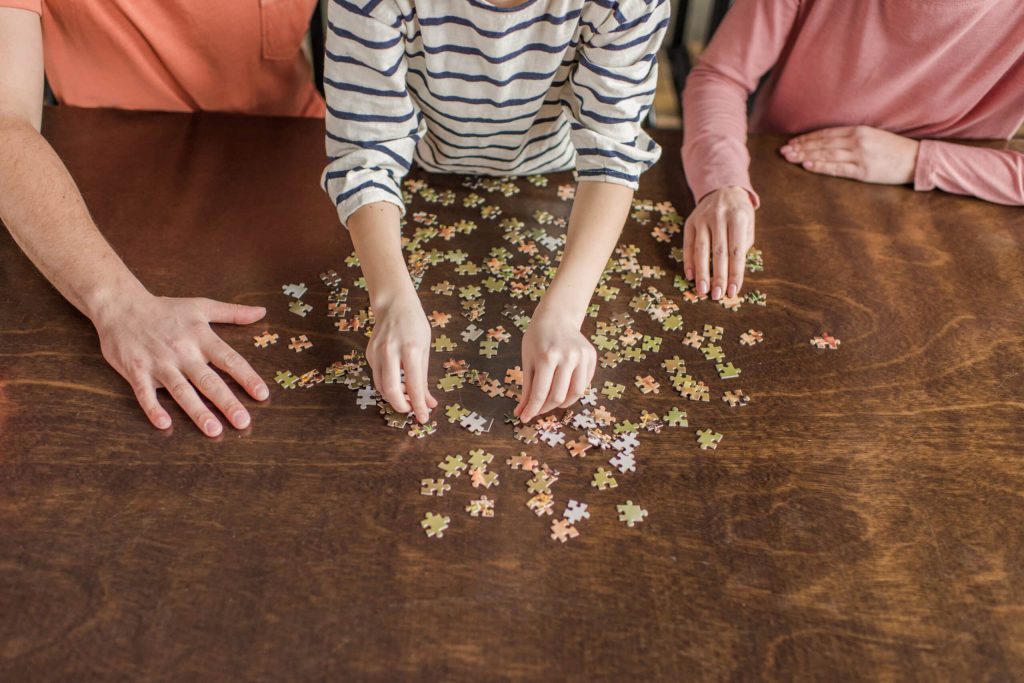
Engaging with logical puzzles fosters a sense of independence and self-efficacy in children. As they work on problems independently, they become more confident in their ability to face challenges. This autonomy encourages them to trust their instincts and creative problem-solving capabilities. For instance, when working on a complex jigsaw puzzle, children learn to connect pieces based on their insights. This ability to formulate a plan, adapt, and make decisions independently mirrors real-life situations, wherein self-reliance becomes crucial for personal development.
Integrating Technology for Collaborative Learning
In today’s digitally-driven world, logical puzzles can also be integrated into technology, enriching the learning experience further through collaborative learning platforms. Online puzzle apps and games encourage children to engage with peers remotely, expanding their collaborative problem-solving skills. For example, platforms like Code.org offer logic-based games that not only boost coding skills but also promote teamwork. This blend of technology with traditional puzzle-solving creates an immersive learning environment, inviting children to explore while also interacting socially. Moreover, the gamified aspect of these platforms often keeps them engaged longer—a key component in maintaining their interest in learning.
Real-Life Application of Logical Thinking
More than just fostering academic skills, the practice of solving logical puzzles prepares children for real-world situations. They develop the ability to analyze scenarios critically and devise systematic approaches to challenges that they may encounter in everyday life. For instance, learning to navigate a maze puzzle hones strategic thinking, which is invaluable when faced with complex decisions like planning projects or resolving conflicts. Such skills are often referred to as “21st-century skills,” essential for succeeding in an increasingly complex and interconnected world.
Encouraging Lifelong Learning Habits
By exposing children to logical puzzles from an early age, we are not only enhancing their immediate learning experience but are also cultivating lifelong learning habits. Engaging in puzzles helps children develop a natural curiosity, driving them to seek out new intellectual challenges well into adulthood. This consistent engagement with problem-solving fosters a mindset geared toward continuous improvement and exploration, essential traits for navigating the evolving landscape of knowledge and skills demanded in modern society.
DISCOVER MORE: Click here to dive deeper
Conclusion
In summary, the integration of logical puzzles into children’s learning journeys opens a myriad of educational benefits that extend far beyond simple entertainment. These engaging challenges not only enhance cognitive abilities such as memory retention and concentration but also foster critical social skills through collaborative learning. By encouraging emotional resilience, independence, and self-efficacy, logical puzzles equip children with the necessary tools to navigate both academic and real-world challenges effectively.
The significance of exposing children to logical problem-solving techniques cannot be overstated in today’s fast-paced, technology-driven world. As we further explore the potential of puzzles, it becomes increasingly clear that they serve as a catalyst for the development of 21st-century skills, preparing children to analyze, adapt, and innovate in various settings. Moreover, the infusion of technology with logical puzzles gives children a unique opportunity to engage with peers, fostering teamwork and communal problem-solving skills.
Ultimately, nurturing a love for logical puzzles not only helps children excel in their current educational endeavors but also instills a lifelong passion for learning and exploration. By integrating these enriching activities into everyday life, parents and educators can inspire a generation of thinkers who are well-equipped for the future. Thus, the journey through logical puzzles is not merely an educational exercise; it is an essential step toward cultivating confident, capable leaders of tomorrow.
Related posts:
Challenges of Logical Reasoning: How Puzzles Stimulate Creativity and Logic
The Relationship Between Logical Reasoning and Decision Making in Strategy Games
Exploring Logical Reasoning in Digital Games: Challenges and Benefits
The Intersection between Logical Reasoning and Strategy in Card Games
Developing Logical Reasoning Skills Through Board Games
How Logic Puzzles Can Improve Memory and Concentration

Linda Carter is a writer and puzzle expert specializing in mind games, brain teasers, and cognitive challenges. With extensive experience helping individuals enhance their problem-solving skills and think critically, Linda shares her knowledge on our platform. Her goal is to empower readers with practical advice, engaging puzzles, and strategies to sharpen their minds and achieve success in the captivating world of mind games and puzzles.