The Psychology of Solving Puzzles: How Mind Games Enhance Critical Thinking
Exploring the Cognitive Benefits of Puzzles
The world of puzzles is a captivating realm that challenges our intellect and sharpens our cognitive skills. Engaging in mind games not only provides entertainment but also plays a critical role in enhancing our critical thinking abilities. From crosswords to Sudoku, these puzzles do more than engage our leisure time; they require strategic thought and creative problem-solving. Whether it’s figuring out a tricky crossword clue or navigating complex number patterns in Sudoku, the mental workout offered by these challenges is extensive and enlightening.
Consider the multiple benefits of regularly solving puzzles:
- Improved Memory: Various studies suggest that regular puzzle solving can significantly boost memory and recall. For instance, engaging with crosswords has been shown to help maintain cognitive function in older adults, enhancing their memory retention over time.
- Enhanced Problem-Solving Skills: Puzzles often present complex challenges that refine our approach to decision-making. This adaptability is especially valuable in professional settings where innovative solutions are required to tackle everyday challenges.
- Increased Focus: Puzzles demand concentration and intensive mental engagement. Completing a jigsaw puzzle or analyzing chess moves helps train our attention span, essential for improved productivity in our daily lives.
Beyond these immediate benefits, recent studies indicate that engaging with puzzles can also stimulate brain regions associated with critical thinking and creativity. For example, solving an intricate logic puzzle requires not only mental acuity but also the ability to think outside the box, making connections that might not be immediately obvious. These mental exercises foster a mindset geared towards innovation and adaptability, traits that are incredibly useful in both personal and professional spheres.
Additionally, different types of puzzles appeal to various aspects of our cognitive processes. For instance, mathematics enthusiasts may find joy in logic puzzles and brain teasers, while language lovers often gravitate towards crosswords. This diversity in puzzle types can encourage individuals to explore new cognitive pathways, further enhancing their mental dexterity.
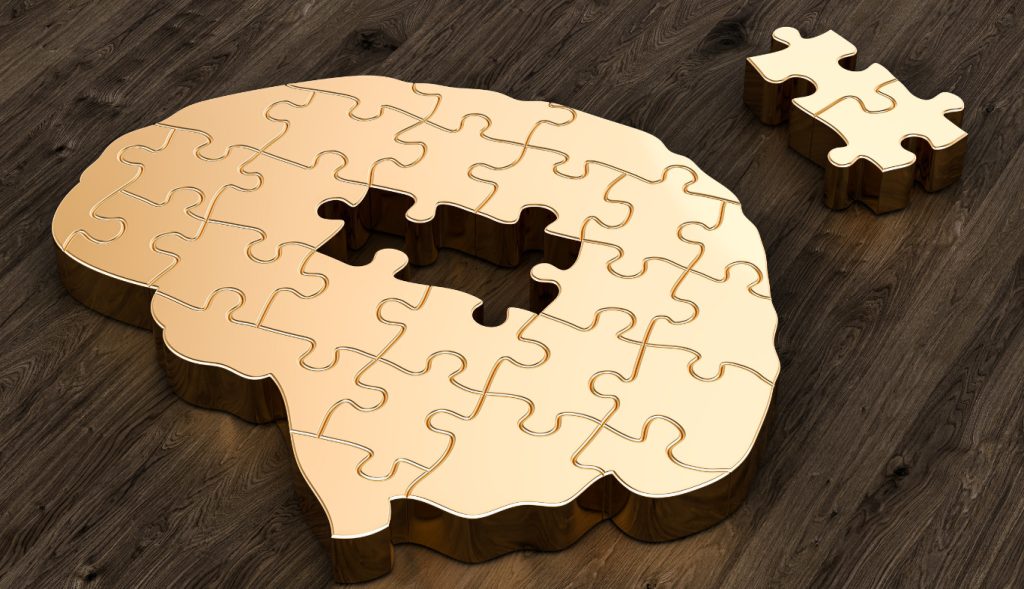
Incorporating puzzles into our daily routines can enhance our cognitive capabilities in meaningful ways. From collaborating on a crossword with friends to competing in Sudoku against oneself or others, the exhilarating challenge of puzzles can inspire individuals to adopt more innovative thinking patterns. Readers are encouraged to consider these intellectual exercises as not merely a pastime but as a valuable tool for lifelong learning and cognitive growth.
DIVE DEEPER: Click here to uncover more insights
The Cognitive Mechanisms Behind Puzzle Solving
Delving into the psychology of solving puzzles opens up a fascinating discussion about the cognitive mechanisms at play. When individuals engage with puzzles, they activate a series of brain functions that facilitate the development of critical thinking and problem-solving skills. Neuroscientific research has shown that brain activity increases in the prefrontal cortex, the area responsible for decision-making and complex thought processes, during such intellectual challenges.
One of the most intriguing aspects of puzzle solving is its ability to stimulate neuroplasticity—the brain’s capacity to reorganize itself by forming new neural connections throughout life. This phenomenon plays a crucial role in learning and adaptation, suggesting that regularly engaging with puzzles could actually promote a more agile and responsive intellect. The practice of piecing together information to arrive at a solution encourages individuals to approach problems from various angles, thereby enhancing their critical thinking capabilities.
Additionally, puzzles often require an individual to employ both logic and creativity, exemplifying the concept of divergent thinking. This type of thinking allows for multiple solutions to be considered, which is invaluable in a world that often demands innovative approaches. Strategies commonly employed when solving puzzles include:
- Breaking Down Complex Challenges: Many puzzles start as overwhelming tasks. Implementing a reduction strategy—dividing the task into smaller, manageable components—makes it easier to see connections and patterns.
- Experimentation: Sometimes, the route to the solution involves trial and error, inviting the solver to explore different possibilities before settling on the correct answer. This approach fosters resilience and adaptability.
- Pattern Recognition: Engaging with puzzles can heighten one’s ability to notice patterns and relationships, a skill crucial for effective reasoning and critical thinking.
Research supports that incorporating puzzles into one’s routine not only bolsters cognitive functions but also enhances the overall mood and sense of accomplishment. Engaging with challenging tasks releases dopamine, the neurotransmitter linked to feelings of pleasure and motivation. As individuals overcome obstacles in puzzles, they experience a rewarding sense of achievement, further driving them to tackle additional challenges, both in and out of the puzzle domain.
As we explore the comprehensive landscape of puzzles, we uncover how their inherent complexity mirrors various real-life situations. Much like the unpredictability of everyday problems, solving puzzles equips individuals with practical skills that extend beyond the realm of games. By honing critical thinking and adapting to new strategies, puzzle enthusiasts pave the way for innovative solutions in their personal and professional lives.
Exploring the psychology of solving puzzles unveils the intricate relationship between mind games and critical thinking skills. Engaging with puzzles activates cognitive processes that foster creative and analytical skills. When an individual encounters a challenge, such as a crossword or a Sudoku puzzle, they are not merely playing a game; they are wiring their brain to think differently. This exercise enhances problem-solving capabilities that transcend beyond puzzles and into real-world scenarios.
Moreover, the act of solving puzzles promotes focus and concentration. These mind games require careful attention to detail and logical reasoning, which strengthens the neurons associated with these functions. Research indicates that individuals who regularly engage in critical thinking activities, such as puzzles, tend to have improved memory and cognitive agility. Engaging your mind with these challenges not only acts as a form of entertainment but also serves as a workout for the mind.
| Category | Benefits |
|---|---|
| Enhanced Cognitive Skills | Puzzles stimulate critical thinking and analytical skills. |
| Increased Focus | Mind games improve attention to detail and concentration necessary for problem-solving. |
Furthermore, engaging in puzzles cultivates a sense of achievement. As individuals solve problems, they experience a surge of dopamine, rewarding them for their efforts. This exhilarating feeling encourages individuals to tackle more complex challenges, enhancing their intellectual vitality. In essence, puzzles are more than just games; they are essential tools for grooming sharper, more innovative minds in our increasingly complex world.
DISCOVER: Click here to enhance your memory and concentration
The Role of Emotion and Motivation in Puzzle Solving
While the cognitive mechanisms behind puzzle solving are crucial, emotional factors and motivation also play a significant role in enhancing critical thinking. Research indicates that positive emotions, such as excitement and satisfaction, can bolster cognitive performance. When individuals engage with puzzles they find enjoyable, they not only increase their likelihood of success but also tap into deeper cognitive processes that drive creativity and analytical thinking.
One notable concept in this realm is the Flow State, a mental state where individuals become fully immersed and focused on the task at hand. Psychologist Mihaly Csikszentmihalyi describes Flow as optimal experience characterized by complete absorption and enjoyment. Many puzzle solvers report that reaching this state helps them navigate complex problems more efficiently, leading to innovative solutions. Moreover, the satisfaction derived from achieving a difficult challenge stirs a desire for continuous intellectual engagement, spurring individuals to seek out new puzzles and challenges.
Furthermore, motivation can be linked to the difficulty level of puzzles. Engaging with puzzles that are adequately challenging promotes a sense of accomplishment upon solving, reinforcing positive emotional responses. The Zone of Proximal Development theory posits that learners are more likely to thrive when challenges are moderately difficult—not too easy, causing boredom, and not too hard, leading to frustration. This concept is crucial in understanding why many individuals prefer puzzles that offer a push just beyond their current abilities.
The social dynamics of puzzle solving also contribute to cognitive enhancement. Collaborative puzzles or competitive scenarios, such as escape rooms, encourage individuals to communicate and share strategies, resulting in a richer problem-solving experience. Group dynamics can activate diverse perspectives that enrich critical thinking through brainstorming and shared insights. When participants work together, they mutually inspire each other to look beyond conventional solutions and explore novel ideas.
Data from various studies underscores the connection between social engagement in puzzle-solving settings and improved critical thinking skills. A study from the University of Michigan found that participants who solved puzzles in a group demonstrated greater creative thinking and collaboration compared to those who tackled them solo. This suggests that the social aspect of puzzles not only fosters enjoyment but also serves as a catalyst for heightened cognitive function.
Beyond the immediate benefits, the practice of solving puzzles can be linked to long-term cognitive resilience. As people frequently engage with varied puzzles, they build a mental toolkit filled with techniques, strategies, and insights that enhance their decision-making abilities in real-life situations. This adaptability could be advantageous in navigating life’s complexities, whether in personal relationships or professional environments.
Ultimately, the interplay between cognitive challenges, emotional responses, and social interactions creates a multifaceted dynamic in puzzle solving, illuminating how these mind games not only enhance critical thinking but also contribute to overall mental well-being and sharpen our adaptability in an ever-evolving world.
DIVE DEEPER: Click here to uncover more insights
Conclusion: Unlocking Cognitive Potential Through Puzzles
In conclusion, the exploration of puzzle-solving reveals much about the intricate relationship between mind games and the enhancement of critical thinking skills. As we navigate the realms of cognition, it becomes clear that puzzles serve as more than mere entertainment; they are a robust tool for mental development. The psychological interplay of emotion, motivation, and social dynamics contributes significantly to stimulating our cognitive faculties. Engaging with puzzles that evoke positive emotions and embody the right level of challenge propels individuals into a Flow State, fostering not only enjoyment but also effective problem-solving strategies.
Furthermore, our understanding deepens when we consider the collaborative aspects of puzzle solving. As demonstrated by studies like the one from the University of Michigan, working in groups enhances not only creativity but cultivates teamwork as well, illustrating that collaborative efforts can expand our cognitive horizons. This social engagement and shared learning environment ignite diverse perspectives that further enrich our analytical abilities.
Ultimately, the consistent practice of solving puzzles equips individuals with a mental toolkit necessary for real-life challenges. These skills not only confer immediate benefits, such as improved decision-making, but also build long-term cognitive resilience, preparing us for the uncertainty of an evolving world. As you ponder the next puzzle to tackle, remember that embracing these mind games is a step toward unlocking your full cognitive potential and enhancing not just your critical thinking abilities, but your overall mental agility.
Related posts:
Escape Games: Learning to Collaborate and Solve Problems Under Pressure
How Math Games Stimulate Critical Thinking in Children
Digital Puzzles: How Technology Transforms Critical Thinking
The Art of Solving Puzzles: Strategies and Techniques of Critical Thinking
The Impact of Board Games on Group Problem-Solving Ability
Recreational Mathematics: Using Number Puzzles to Develop Analytical Skills

Linda Carter is a writer and puzzle expert specializing in mind games, brain teasers, and cognitive challenges. With extensive experience helping individuals enhance their problem-solving skills and think critically, Linda shares her knowledge on our platform. Her goal is to empower readers with practical advice, engaging puzzles, and strategies to sharpen their minds and achieve success in the captivating world of mind games and puzzles.