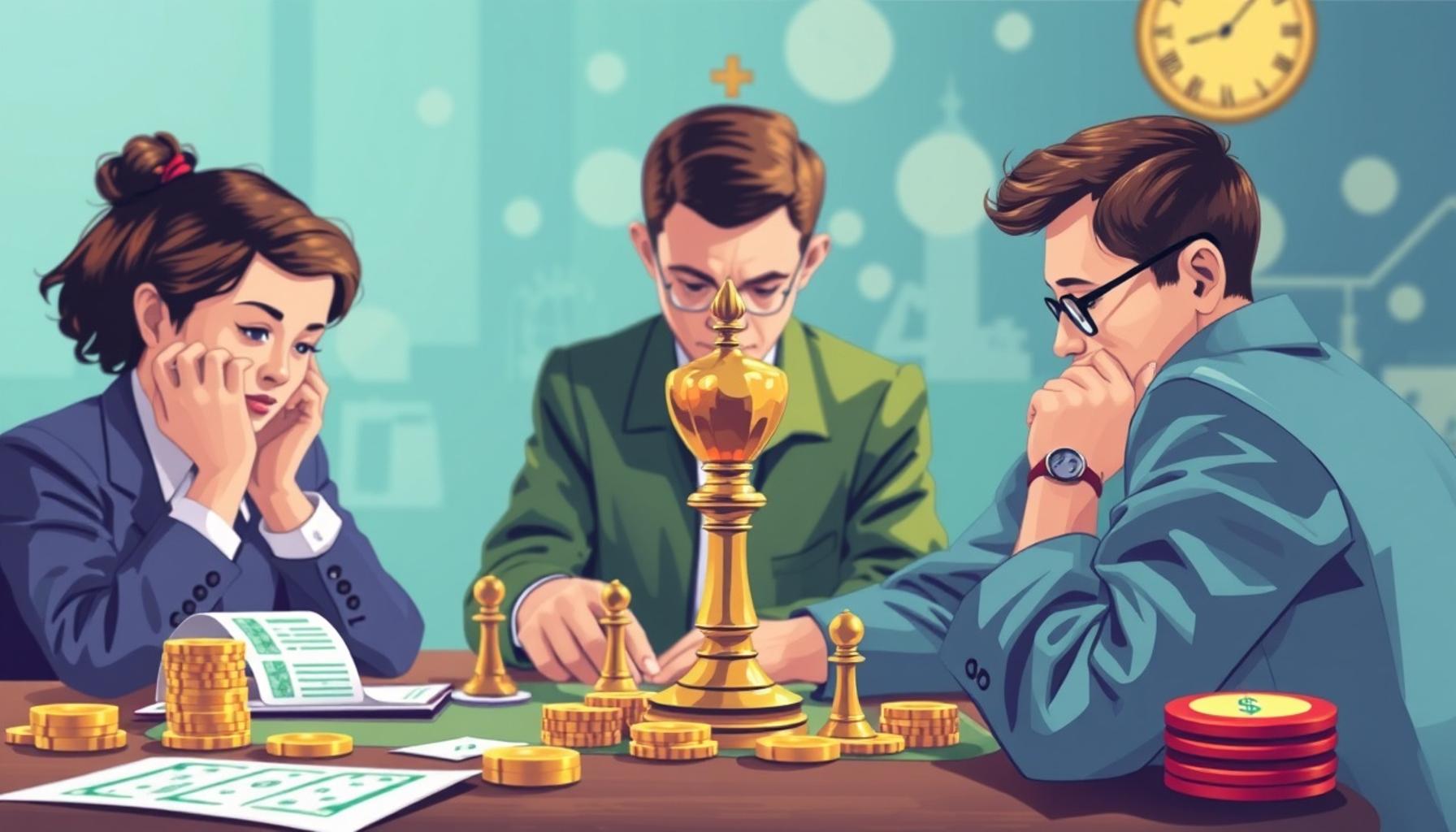
Developing Creativity Through Puzzles: The Intersection of Strategy and Innovation
Unlocking the Mind’s Potential
In an age where problem-solving and creativity are more crucial than ever, puzzles emerge as a remarkable tool for enhancing cognitive skills. From crossword puzzles to brain teasers, engaging in these challenges can lead to significant breakthroughs in both strategic thinking and innovative problem-solving. The realm of puzzles offers a diverse landscape, fostering cognitive engagement that extends beyond mere entertainment. In fact, numerous studies have shown that consistent engagement with puzzles can lead to improvements in both short-term and long-term cognitive function, making them an invaluable practice for personal and professional development.
The Benefits of Puzzles
Taking time to solve puzzles offers various advantages, making them an attractive option for those seeking to enhance their mental acuity:
- Improved cognitive function: Regular engagement can sharpen memory and enhance analytical abilities. For instance, research by neuroscientists indicates that those who regularly challenge their brains with puzzles can delay the onset of age-related cognitive decline.
- Increased lateral thinking: Puzzles encourage unconventional approaches to challenges, prompting individuals to consider multiple solutions or viewpoints. This skill is invaluable in industries that thrive on innovation, such as technology and design.
- Stress reduction: Focusing on a puzzle can act as a mental escape, promoting relaxation. Engaging in a crossword puzzle or Sudoku can provide a brief respite from daily pressures, allowing participants to return to their tasks with renewed focus and energy.
Examples of Puzzles as Creative Tools
Several types of puzzles can cultivate creativity, appealing to a wide range of interests:
- Logic puzzles: These require deductive reasoning and often inspire innovative strategies. For example, solving a classic puzzle such as the “Einstein’s Riddle” not only enhances logical thinking but also generates a sense of accomplishment upon reaching the solution.
- Jigsaw puzzles: These enhance spatial awareness and the ability to visualize concepts. With the popularity of intricate designs and 3D jigsaw puzzles, individuals engage in creative assembly, potentially reflecting on broader themes or narratives while piecing together their project.
- Escape rooms: These demand teamwork and creative thinking under pressure, often leading to collaborative innovations. Participants must harness their unique abilities and perspectives, showcasing how diverse approaches can lead to a single objective – escaping within a set time limit.
As we explore the dynamic link between puzzles and creativity, distinct strategies for harnessing this potential will be unraveled. Understanding how to leverage these activities can unlock pathways to innovation and strategic success. Moving forward, it may be worthwhile to incorporate regular puzzle-solving into personal routines, as the cognitive benefits continue to proliferate. With the increasing recognition of mental wellness, embracing puzzles not only contributes to personal growth but also nurtures a fertile ground for creative thought in various environments, perhaps even inspiring the next groundbreaking idea or solution.

DIVE DEEPER: Click here to discover the psychological benefits of mind games
Puzzles as Catalysts for Creative Thinking
At the heart of creativity lies the ability to view problems through various lenses, a skill that puzzles nurture effectively. The engagement with complex challenges demands that individuals not only think critically but also explore unexpected pathways to solutions. Puzzles create an environment that encourages creative exploration, pushing the boundaries of conventional thought. As a result, participants enhance both their strategic capabilities and their innovative prowess.
Transforming the Way We Problem-Solve
Puzzles function as a type of mental gymnasium, allowing individuals to build and refine their problem-solving toolkit. By consistently tackling diverse puzzles, people develop an acute sense of pattern recognition, enabling them to identify connections that might otherwise remain hidden. This skill is particularly beneficial in high-stakes environments such as business, where innovative solutions can set apart industry leaders from their competitors. Some tangible benefits of engaging with puzzles include:
- Enhanced problem-deconstruction skills: The act of breaking down a puzzle into smaller, manageable parts mirrors the process of tackling complex projects in the workplace. This practice fosters a mindset of analysis and patience, quintessential for any creative thinker.
- Cultivation of focus and concentration: Solving puzzles often requires sustained attention, teaching individuals how to maintain focus on long-term projects or ideas without losing sight of their goals. This ability is fundamental in environments where multitasking can lead to decreased innovation.
- Encouragement of resilience: Puzzles often present challenges that can be frustrating, yet they also teach perseverance. Facing obstacles and attempting various strategies before arriving at a successful solution builds a mentality that embraces challenges—an essential trait for innovative thinkers.
The Science Behind Puzzle Engagement
The impact of puzzles on cognitive functions has been supported by various scientific studies. For example, a recent study published in the Journal of Cognitive Enhancement found that participants who regularly engaged in puzzle-solving tasks reported not only better cognitive performance but also increased levels of creativity in unrelated tasks. This correlation suggests that the mental skills honed during puzzle solving can transfer to other creative processes, empowering individuals to approach new challenges with confidence and originality.
Through this understanding of the beneficial aspects of puzzles, we can see that engaging with them is not merely a recreational pastime; it is a pathway to developing advanced cognitive abilities that are vital in today’s fast-paced world. As individuals seek to harness their creative potential, integrating puzzles into their daily routines can help reshape the way they think and approach challenges. The intersection of strategy and innovation is where these cognitive tools thrive, paving the way for groundbreaking ideas and solutions.
The engaging world of puzzles plays a vital role in fostering creativity and innovation. Through strategic thinking and problem-solving, individuals are often pushed to explore unconventional solutions, ultimately enhancing their creative capabilities. When faced with complex puzzles, minds are challenged to break free from traditional patterns, prompting innovative thought processes that can transcend beyond the puzzle itself and into real-world scenarios. This intersection of strategy and creativity is essential in a rapidly evolving world where adaptability and original ideas drive success.
Moreover, puzzles can serve as an excellent tool for team-building and collaboration. Engaging in group puzzles encourages communication and cooperative problem-solving, which are essential skills in both personal and professional development. As team members work together to navigate challenges, they develop a deeper understanding of each other’s strengths and weaknesses, fostering a culture of innovation that is critical for success.
Additionally, the diversity in puzzle types—from logic games to combinatorial challenges—offers various avenues for exploring creativity. Each puzzle presents unique scenarios that encourage lateral thinking. For instance, crossword puzzles require not just vocabulary knowledge but also the ability to see connections between seemingly unrelated concepts. By embracing these different forms of strategic challenges, individuals can harness creativity in a broader context, revealing their potential in various fields of work or art.
The learning process inherent in solving puzzles also plays a significant role in developing innovative strategies. Each successful solution reinforces the notion that creativity often stems from trial and error, teaching valuable lessons in persistence and resilience. Ultimately, the rich interplay of creativity, strategy, and innovation cultivated through puzzles is an invaluable asset in creating a more adaptable and inventive future.
| Category | Description |
|---|---|
| Enhanced Problem-Solving Skills | Puzzles challenge individuals to think critically and develop strategies for overcoming obstacles. |
| Team Collaboration | Engaging in puzzles fosters teamwork, encouraging participants to communicate and solve challenges collectively. |
DISCOVER MORE: Click here to explore the impact of board games
Unlocking Collaborative Creativity Through Puzzles
In addition to honing individual cognitive skills, puzzles also play a pivotal role in fostering collaboration and enhancing team dynamics. When groups come together to solve a puzzle, they must employ collective problem-solving strategies that draw on the diverse perspectives and strengths of each member. This collaborative environment allows participants to explore multiple viewpoints, thus enhancing creativity and innovation within a team setting.
Team-Building through Puzzle Engagement
Modern workplaces increasingly prioritize innovation, and engaging in puzzle-related activities can serve as an effective team-building exercise. By navigating complex puzzles together, team members learn to communicate better, share ideas, and delegate tasks, facilitating deeper relationships based on mutual respect and understanding. Some notable advantages of utilizing puzzles for team-building include:
- Improved communication skills: Teams learn to articulate their thoughts clearly and actively listen to one another. As they collaborate to devise solutions, clearer communication channels are established that can later translate to improved workplace dynamics.
- Increased adaptability: Working on puzzles often demands a swift change in tactics when initial approaches fail. Team members develop flexibility and become more open to alternative ideas, fostering an innovation-driven culture that is essential for sustained success.
- Strengthened team cohesion: Successfully completing a puzzle together can lead to a shared sense of accomplishment, strengthening interpersonal bonds and creating a more unified team. This collective success can act as a catalyst for future collaborative projects, where innovative ideas thrive.
Puzzles in Educational Settings: Fostering Future Innovators
The benefits of puzzles extend far beyond corporate environments—they are also instrumental in shaping future leaders and innovators. Educational institutions are increasingly integrating puzzles into their curricula, recognizing their capacity to enhance critical thinking, creativity, and teamwork among students. Studies demonstrate that engaging students with puzzles leads to higher retention of information and deeper understanding of subject matter. In one notable case, a national educational initiative introduced puzzle-solving activities into STEM education, resulting in remarkable improvements in both student engagement and problem-solving skills.
Additionally, extracurricular activities centered around puzzles provide students with opportunities to collaborate in safe, low-pressure environments. These initiatives encourage not only self-discovery but also the risk-taking that often leads to breakthroughs in thinking. By facilitating environment-rich learning experiences, educators can instill a passion for continuous exploration and innovation in their students.
The Influence of Technology on Puzzle Solving
As technology continues to shape the way we interact with puzzles, it also expands the possibilities for creative expression and innovation. Digital puzzles, ranging from mobile applications to online escape rooms, allow participants to engage in collaborative problem-solving across geographical barriers. This virtual platform has paved the way for global partnerships and diverse teamwork, fostering a spirit of innovation that transcends traditional boundaries.
The fusion of puzzles and technology not only nurtures creativity but also cultivates a tech-savvy mindset that is increasingly essential in today’s workforce. Companies are leveraging platforms that incorporate puzzles to assess potential hires, recognizing that the ability to think creatively is as crucial as technical proficiency. Thus, as both strategic tools and innovative conduits, puzzles continue to find their place at the intersection of strategy and creativity, encouraging teams to leap into uncharted territories of thought and discovery.
DISCOVER MORE: Click here to uncover the benefits of card games
Conclusion: The Transformative Power of Puzzles in Creative Development
As we’ve explored, puzzles offer a multifaceted approach to enhancing creativity at the intersection of strategy and innovation. They serve not only as tools for individual cognitive development but also as catalysts for fostering collaboration and teamwork. The skills gained through puzzle-solving—such as improved communication, adaptability, and enhanced problem-solving abilities—are invaluable in both workplace settings and educational environments.
The integration of puzzles into team-building exercises enriches interpersonal relationships and creates a shared sense of accomplishment, further propelling teams towards innovative breakthroughs. Meanwhile, educational institutions harness the power of puzzles to stimulate critical thinking and ignite the curiosity of future innovators. The remarkable impact of puzzles on student engagement and retention highlights their usefulness in shaping well-rounded individuals capable of navigating complex challenges.
With the influence of technology, puzzles have evolved to include digital formats that encourage global collaboration, erasing geographical boundaries in creativity. This evolution fosters a culture of innovation that is essential in our ever-changing world, where the ability to think outside the box is paramount.
In conclusion, embracing puzzles as strategic tools for creativity development can open new avenues for innovation. As more organizations and educational systems recognize their potential, it becomes evident that puzzles are not just a pastime—they are essential to unlocking the creative potential within individuals and teams alike. Пuzzles not only challenge our minds but also inspire us to explore uncharted territories of thought, underscoring their significant role in cultivating a future driven by creativity and innovation.
Related posts:
Strategic Thinking in Card Games: Tactics and Psychology Behind the Moves
Strategy Games and the Psychology of Critical Thinking: Learning to Anticipate Opponent Moves
The Impact of Strategy Games on Decision Making in Pressure Situations
The Influence of Board Games on the Development of Leadership and Collaboration Skills
Strategic Thinking and the Art of Negotiation in Board Games: Tactics to Win Conflicts
Puzzles as Learning Tools: Stimulating Strategic Thinking in Children

Linda Carter is a writer and puzzle expert specializing in mind games, brain teasers, and cognitive challenges. With extensive experience helping individuals enhance their problem-solving skills and think critically, Linda shares her knowledge on our platform. Her goal is to empower readers with practical advice, engaging puzzles, and strategies to sharpen their minds and achieve success in the captivating world of mind games and puzzles.